
TRIGGER WARNING: This article contains vivid descriptions of sexual abuse and its effects on victims’ mental health, including mentions of suicide and depression.
Walking alone at night is a frightening experience for almost all women. They constantly look behind their shoulder to make sure they aren’t followed. Going steps faster, holding any makeshift self-defense weapon because it is never safe. And once they reach their homes and see the familiar faces of their loved ones, they heave a sigh of relief.
But for some women, home is as dangerous as outside.
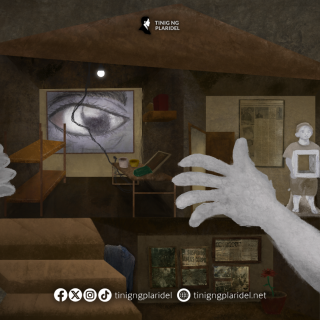
Selene, 27, who asked to withhold her identity, lived in a small, under-construction house in Quezon City where curtains replaced bathroom doors. Once in high school, she sensed a man filming her from behind the curtain while she was taking a bath.
When she turned 17, Selene was sleeping tightly in her bedroom when she felt a hand fondling her breasts. A shot of panic woke her. She then grabbed the nearest pillow and continuously bashed the man until he left the room. At first, she thought it was only a nightmare, but she later realized that it was all real.
In both instances, it was her dad who violated her.
“Later that day, kinausap ako ng ate ko. Nagkwento daw sa kanya si daddy na he was trying to hug me raw but then tumama sa breast ko,” she told TNP. “Sabi ko sa ate ko, it’s not true kasi my eyes were half-open. I really saw him doing it.”
It was only after a talk with her psychologist that she found the courage to confront her father about the incident. But her dad responded with denial and threats of committing suicide.
Selene only needed him to apologize so she could begin healing, but she said her dad showed not an ounce of remorse. She has since kept mum about her experience, telling only her two sisters about what happened. She only recently managed to confide in her boyfriend of two years.
It was not a story she could openly share with friends, and pushing the trauma further down the crevices of her mind took a significant toll on her mental health.
“I was at that place [where I questioned] if may mali ba ko? Ba’t sarili kong daddy ’yung gumawa sa akin nang ganon. I was questioning myself [at] hindi ko agad naisip na sila yung mali,” Selene said.
Selene is one of many victims who shared sexual abuse stories on TikTok, the video-focused social media platform with over 1 billion monthly active users as of 2021. Its algorithm opened a world of content creation where anyone can realize online fame and virality.
The song “I’ve had enough” by American artist Melissa KB trended on TikTok late last year. With its lyrics “Admit you did it. We all know you did it. And yet you still gaslight me up,” victims all over the world exposed their abusers online.
Users joined the trend by recording themselves with the trending song playing in the background. The platform’s video editing features allow them to explain their experience, some of which are harrowing accounts of family members themselves being perpetrators of sexual harassment.
As of writing, over 116,000 users have used the song on TikTok.
Eighteen-year-old Niña Hibaya from Cagayan de Oro City shared a similar video on TikTok in November 2021. The man who put her into a life of debilitating trauma was her uncle.
When she was five years old, her parents would leave her at her grandmother’s house where she would be cared for by her uncle. He used to be her favorite because he would spoil her with gifts and candy.
But his touch soon changed, his sweetness more unusual. Niña came to believe his uncle’s behavior was normal, as it went on for years.
“He did a number of sexual things to me that a child shouldn’t have experienced. He made me touch his genitals,” Niña said.
It was only in first grade that she understood that her uncle’s attention was wrong. She was confused, afraid and disgusted. Niña also grew worried for her two younger siblings.
“I felt a sense of responsibility kasi ako yung eldest and I don’t know why but yung top priority ko noon was to get my siblings as far away from him as possible,” Niña said.
Just like Selene, staying silent about her trauma for years gravely affected her well-being.
“Noong 14 ako, I got depressed and very suicidal. It was a very dark moment for me,” Niña said. “There were also times na I would hyperventilate ‘pag naiisip ko ‘yun.”
Because she could no longer handle her depressive episodes alone — especially the ones that triggered her asthma — she had to tell her mother. Her mom was very supportive and she helped her get through the panic attacks.
Meanwhile, Selene’s confrontation with her father didn’t bear fruit. She instead took her experience to TikTok in November last year, speaking about intrafamilial sexual abuse — a taboo in Filipino culture, just like many sensitive topics related to sexuality.
As with many sexual abuse victims, Selene had reservations about posting the video. When she did, she wasn’t exactly proud of it, as she said she feared the post would re-ignite tension in the family.
“To be honest nobody helped me at all – as in nobody,” she said. “Kasi nung sinabi ko sa sister ko na sinabi ko na sa daddy ko na alam ko ‘yung ginawa nya, she somehow got mad at me for opening it up again.”
She felt more comfortable sharing her story on TikTok where the algorithm bridged her to other victims. If she posted on Facebook, she said, only her family and friends would see her story, and she could be judged for speaking up.
After all, the man she was exposing was her father, which could taint the image of their family in the eyes of their friends and relatives.
Surprisingly, Selene received comments that were mostly positive and empathetic. But in an experience familiar to many survivors, there were TikTok users that blamed Selene for what happened. Still, Selene understood how “clueless” the audience was about what she had gone through.
“Speaking about [sexual abuse] is letting someone else speak about their experience as well. If I can talk about it, it shows that there’s nothing wrong with me and other victims should feel [that] as well,” Selene said.
After opening up to her mother, Niña also joined the ‘admit you did it’ trend on TikTok. She felt that it was years too late for justice, but she wanted to at least voice it out.
“It was very refreshing for me cause I get to let out all these hidden emotions. … Finally, I can be honest about it,” she said.
Seeing the growth of the TikTok trend, the artist, Melina KB launched the “We’ve Had Enough Campaign,” which drumbeats support towards sexual abuse survivors. Earnings from the campaign were loaded into an anti-sexual violence group in Tennessee.
“It has meant more than anything to me to see my art shared as a means of amplifying the voices of others, and I encourage you to join us in supporting this cause,” Melina KB said on her website.
The UN Children’s Fund (UNICEF) reported in 2016 that about 17.1% of 3,866 Filipino children aged 13 to 24 experienced sexual violence while growing up, 13.7% of whom were sexually abused at home.
Republic Act no. 7610 notes that children in situations that affect or could affect their survival should be ‘protected and rehabilitated’ by the state. The act penalizes physical, psychological, emotional and sexual child abuse.
Perpetrators can be imprisoned between 12 years and one day to 14 years and eight months, subject to extension, according to the amended law. A fine not less than P500 thousand will be imposed on the suspect.
The same penalties apply if the perpetrator is the victim’s parent, step-parent or guardian. They will lose parental authority over the child.
While the law aimed to protect children, its implementation proved to be challenging as many cases of sexual abuse still hide under the radar.
The 2016 UNICEF study also found that despite the prevalence of physical and sexual violance, only one out of three women have sought help.
Ten years later, Selene is still reeling from her childhood trauma. Interacting with men her father’s age became uncomfortable. Selene said she flinches at the very idea that they might turn out to be like him.
She takes caution by being assertive against things that make her uncomfortable, more careful now with her relationships with men in general.
Victims of sexual abuse can report and seek assistance from Gabriela Party-list through an anti-harassment chatbot called Gabbie. They can also seek help from the Philippine Commission on Women, which would connect them to relevant agencies.
The Child Protection Network Foundation also addresses reports of sexual abuse cases involving children.
But as victims take matters into their own hands, Niña and Selene believe lawmakers, enforcers and families need to be at the forefront of ceasing the culture of stigma and discrimination.
“Coping isn’t as hard anymore now that I have people I can tell my story to … Bottling up your feelings and emotions is never really a good thing, sasabog ka lang,” Niña said.
NOTE: This story was originally written for a J117 Online Journalism class under Prof. Danilo Arao.