“Great protests are great artworks,” artist Diego Rivera wrote.
Art always confronts the sociopolitical realities of its time: from literature that puts dissent into words, to art movements that bring art closer to the masses, to cinema that brings social realities to the screen.
In the Philippines, this power of visual art became particularly potent in breaking free from the shackles of the over-20-year Marcos regime.
On Sept. 21, 1972, the late President Ferdinand Marcos Sr. signed Proclamation No. 1081, officially plunging the Philippines under the brutal claws of Martial Law. Mounting widespread corruption, human rights violations and political assassinations under the regime brought the conjugal dictatorship of Ferdinand and Imelda to its knees, eventually being deposed in 1986.
With the dictator’s death in 1989, the Marcoses’ return from exile was marked by efforts to cultivate an idealized image of Marcos Sr.’s regime. Their attempts to distort public perception proved successful, with Ferdinand “Bongbong” Marcos Jr. winning a landslide presidential victory in 2022.
Renowned filmmaker Lino Brocka once expressed upon receiving the 1985 Ramon Magsaysay Award for Journalism, Literature and Creative Communication Arts that an artist’s supreme duty is to “investigate the truth no matter what forces attempt to hide it, and confront people with it” by taking themselves to the slums, the streets and the battlefields.
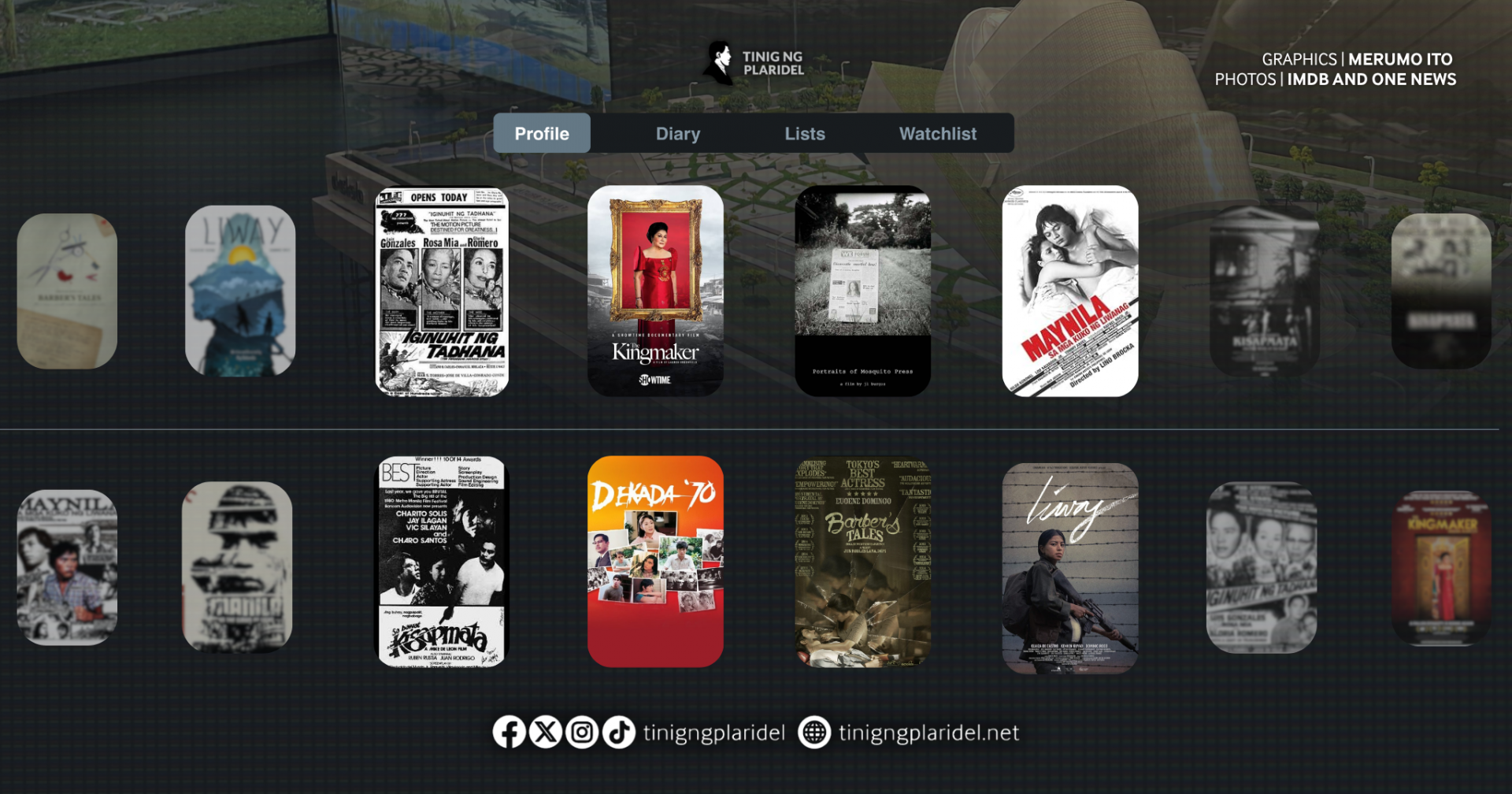
Hence, amid efforts to suppress the dictatorship’s realities through deception and propaganda, Filipino artists and media practitioners sought counteraction through works that expose the realities behind the “Golden Age” facade of Marcos Sr.’s Bagong Lipunan, many of which are freely accessible online today.
As one consumes media about and against Martial Law, one remembers the roots of resistance. Consuming these works validates visual art’s power as a site of Filipinos’ struggle for truth and freedom amid continued rewriting of the past.
Myths still linger
In his message, Brocka warned of a government-controlled media and an establishment of “fantasies and escapist fare” that will pollute our minds.
This warning had long been proven true. Even before the horrors of the decades-long dictatorship, the Marcos family had already utilized the media’s reach to invigorate their brand. Through cinema, they communicated a carefully curated image of themselves and birthed the Marcosian obsession with perfection.
The propaganda film Iginuhit ng Tadhana (1965) aided then-Senate President Marcos Sr.’s presidential campaign.
Viewers see his life events dramatized, including the Julio Nalundasan murder trial, his “heroic duties” and “war medals” in World War II and his devoted pursuit of Imelda Romualdez. He eventually runs for president after being portrayed as initially reluctant to pursue a career in politics, as though it was drawn by destiny.
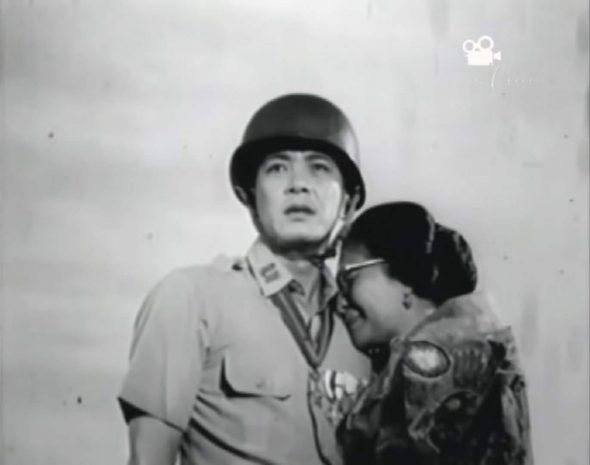
Three pertinent themes – kalalakihan, katalinuhan at katotohanan – were used as propaganda devices to justify Marcos Sr.’s authority and presidential bid.
Woven into a flowery script that positions Marcos as a victim of unfair accusations, those themes cast him as a true war hero and a relentless romantic.
Complementing this early version of Marcos Sr.’s mythmaking was the depiction of Imelda as opposing their son Bongbong’s desire to follow in his father’s footsteps. However, Lauren Greenfield’s documentary The Kingmaker (2019) showed otherwise.
If the prior film serves as the patriarch’s biopic, this documentary puts Imelda Marcos at the center. Here, she is the architect of her husband’s rise to power and her son’s 2016 vice-presidential candidacy.
The film juxtaposes her self-branding as the “mother of the Philippines” with interviews of displaced families who still struggle to coexist with imported animals at the Marcos Sr.-established Calauit Safari Park.
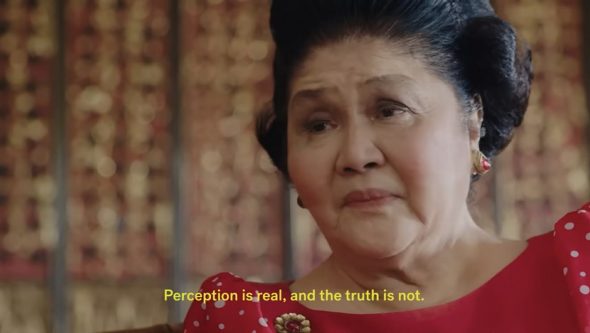
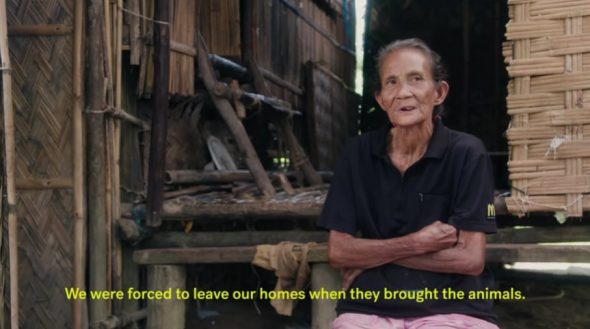
Viewers also get a glimpse of the Marcoses’ masterful political maneuvers as they join forces with their then-political allies, the Dutertes, as a critical step toward returning to Malacañang.
Yet, Imelda’s megalomania and braggadocio die in the face of media, as she said, “Problem with the media is the gun can kill you only up to the grave. Media can kill you beyond the grave.”
Resistance still speaks
Indeed, the media’s power lies in the truth that it seeks. Heavy media repression forced resistance to hide in plain sight through small presses and allegorical films. “What he says on the screen, he also says in the streets,” Brocka emphasized, for the screen is not separate from the struggle outside it.
JL Burgos’ documentary Portraits of Mosquito Press (2015) revisits the underground media outlets We Forum and Ang Pahayagang Malaya, both published by the filmmaker’s father, Joe Burgos. It delves into the lasting sting of the mosquito press, whose bites criticized the Marcos regime while highlighting the sacrifices made for Philippine democracy after the Marcos dictatorship.
The titular portraits appear literally, as Burgos photographs the family members and journalists whose memories form the documentary. His own camera occasionally enters the frame, as if to continue the work of those who once documented these stories. To preserve their memories and ensure that the brutalities of the past are not forgotten.
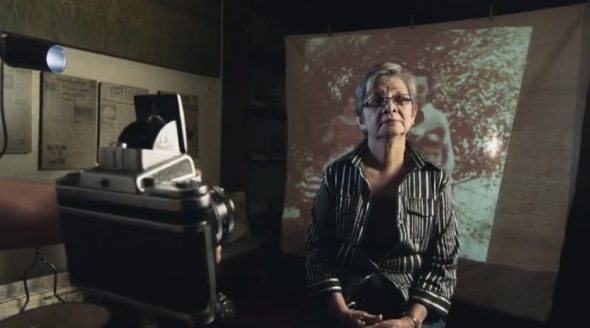
The documentary also refuses to leave that history safely in the past. Its final act recalls the 2007 abduction of farmer-activist and Burgos’ brother Jonas, connecting the history of media censorship under Martial Law to continuing struggles for human rights and freedom of expression.
Back then, filmmakers entrusted viewers with deciphering embedded allegories against the lies peddled by Marcos Sr.’s crony press. After all, these same allegories were already unfolding before the viewers’ eyes day-to-day.
Brocka’s seminal work Maynila sa mga Kuko ng Liwanag (1975) exposes the realities of lower-class Filipinos living in Manila’s decrepitude, a far cry from the Marcoses’ promotion of Manila as synonymous with beauty and success.
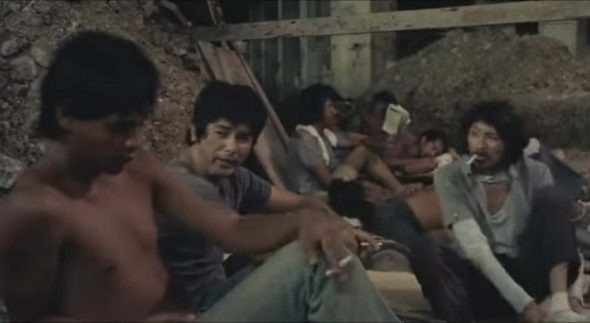
Cracks beneath the city lights reveal the era’s darkness as the film follows Julio Madiaga (Bembol Roco) in Manila as he looks for his girlfriend Ligaya Paraiso (Hilda Koronel), while working exploitative jobs just to make ends meet. The realities exposed of the urban poor, employment scarcity and skin trade continue to haunt the city half a century later.
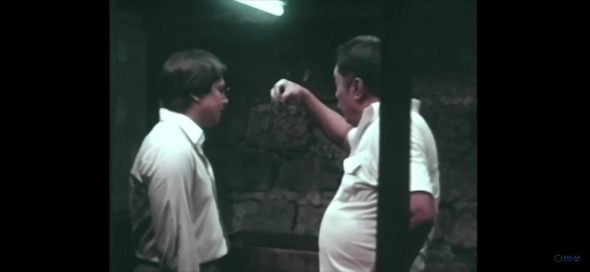
Meanwhile, Mike de Leon’s Kisapmata (1981) focuses on the strongman rule of patriarch Dadong (Vic Silayan), whose suffocating control lingers like unseen eyes lurking throughout the movie.
Dadong’s borderline incestuous relationship with his daughter Mila (Charo Santos-Concio) manifests in his initial disapproval of her marriage and his eventual demand that the couple live under his roof.
Coupled with Mila’s personal journal, which contains her suppressed fears, these portray an obvious power imbalance created by the haligi ng tahanan’s excessive authority, much like what the Marcos dictatorship brought forth.
The regime’s brutalities under Dadong’s roof are synthesized by the line, “Walang ulo, nakanganga; walang mata, nasisilaw,” as Mila appears alongside Dadong’s voiceover explaining his earthworms to Noel.
By associating earthworms with good fortune, the scene evokes the Marcos regime’s authoritarian rule, which demanded obedience and enabled the accumulation of ill-gotten wealth through exploitation.
Stories still resonate
This was the reality Filipinos lived throughout Marcos Sr.’s decades-long dictatorship. And as Brocka urged, “We must go to the streets to find out what is happening;” visual art bore witness to such realities.
Because despite the Marcoses’ elaborate mythmaking and justification of their 20-year rule, resistance prevailed. The new millennium featured new takes on remembering this tumultuous chapter of Philippine history.
Chito Roño’s 2002 adaptation of Lualhati Bautista’s 1983 novel Dekada ‘70 explores political awakening within the Bartolome household as the sons cope with the dictatorship.
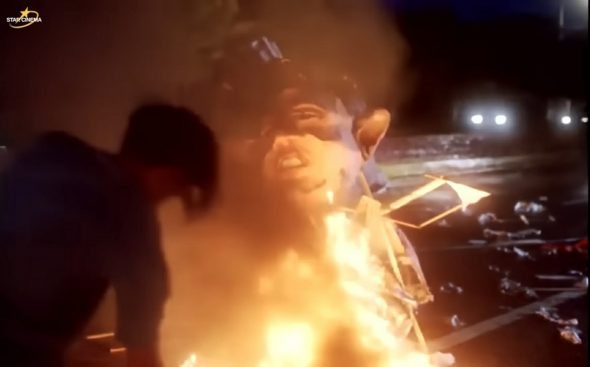
The film establishes a distinctly feminist lens through a woman’s opening voiceover that delves into the theme of “the hand that rocks the cradle rules the world,” depicting women not as confined to the domestic sphere but as those who claim their place in the streets, their hands rocking alongside the many others that “row along the sea of change.”
Particularly striking are the lives of eldest son Jules (Piolo Pascual), who became a high-ranking officer in the revolutionary forces, and his mother Amanda (Vilma Santos). Despite Amanda’s initial ambivalence about why Jules chose to sacrifice his life for others, his choices mark the beginning of her radicalization.
The ending reveals Amanda as the voice behind the monologue, now part of the protesting masses in the streets. Even if they were still under Marcos’ rule, Amanda’s voiceover emphasizes the youth’s significant role, along with their parents who rear them to become catalysts for change.
Another film shown through a feminist lens is Jun Lana’s Mga Kuwentong Barbero (2013). Protagonist Marilou (Eugene Domingo) takes over her late husband’s barbershop after years of living in his shadow and tolerating his infidelity, eventually cutting through a larger theme of sisterhood.
Marilou and Tess (Shamaine Buencamino) play vital roles in housing rebels. Yet, there is irony in being a “barber” who helps rebels with longer hair, as it contrasts with the Martial Law tactic of forcibly cutting the hair of men who sported longer-than-required hair.
Marilou’s friendship with the town mayor’s (Nonie Buencamino) wife Cecilia (Iza Calzado) also becomes the impetus for her transformation from a submissive housewife into a militant woman.
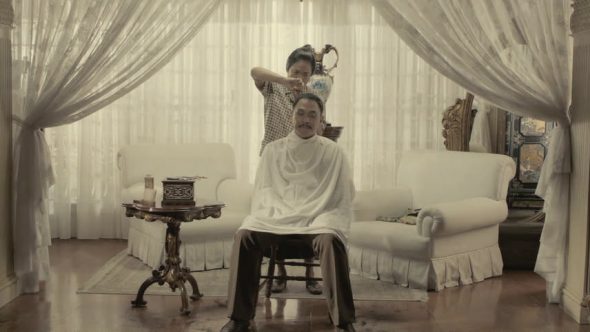
In the final act, Marilou’s confrontation with Mayor Bartolome and her symbolic haircut depict her resistance and liberation from passivity towards militancy.
Kip Oebanda’s Liway (2018) extends this survey of Martial Law through a more personal lens. Based on Oebanda’s childhood experience, the film follows young Dakip in a military camp with his parents Day (Glaiza de Castro) and Ric (Dominic Roco), former commanders of the revolutionary forces.
Innocence and naivety mark Dakip’s life inside the camp, lulled to sleep by his mother’s songs and stories of Liway, the diwata and guardian of Mount Kanlaon. Seen through a child’s point of view, Liway delivers the cluelessness viewers feel as Dakip grows up.
The film delves into the rebels’ humanity as hope becomes an enduring theme in the story, manifesting in Day’s line: “[Hindi] naman magtatagal ang kadiliman. Balang araw, mawawala rin ang halimaw sa ating lugar.”
Their story is but one of the many ways Filipino resistance found a voice through art, taking different forms during and after the Marcos dictatorship.
Echoes remain
Outside cinema, art galleries have also given faces to stories of resistance, particularly those who bore the brunt of the dictatorship and whose collective fight for democracy made the present possible.
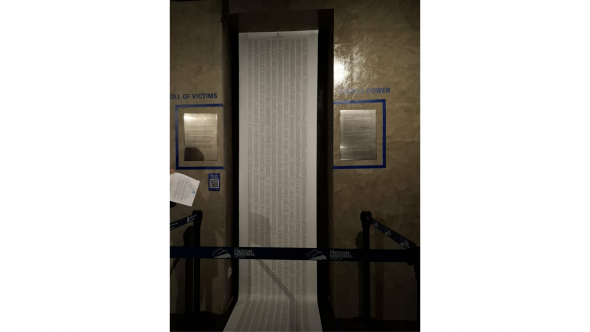
The Freedom Memorial Museum Gallery of the Human Rights Violations Victims’ Memorial Commission (HRVVMC), established to honor and memorialize Martial Law victims and survivors, showcases the regime’s dark memories through artifacts.
Inside the gallery, the Roll of Victims puts names to those who suffered under the dictatorship. Their presence becomes tangible through traces of the state-enforced violence they endured, including the bloodstained clothes of student activists and the Wall of Torture, which features objects used by state forces on victims.
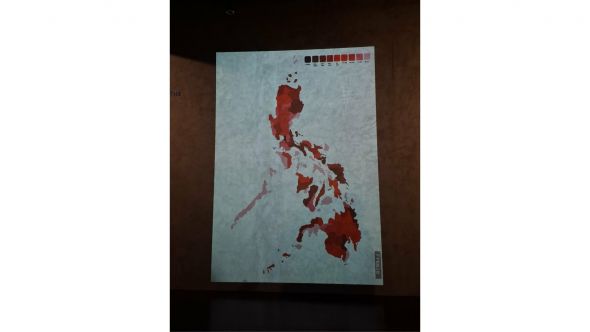
The gallery also reveals the scale of state violence across the country through a Human Rights Violation Heat Map illustrating the pervasiveness of these abuses.
Besides utilizing art as a means of resistance to Martial Law, the gallery also invites museumgoers to participate in its remembrance through a printmaking activity. Linocut prints illustrating the “10 Essential Truths of Martial Law,” created by survivor and artist Edgardo “Egai” Talusan Fernandez with the artist collective Ang Gerilya, carried resistance into another form of art.
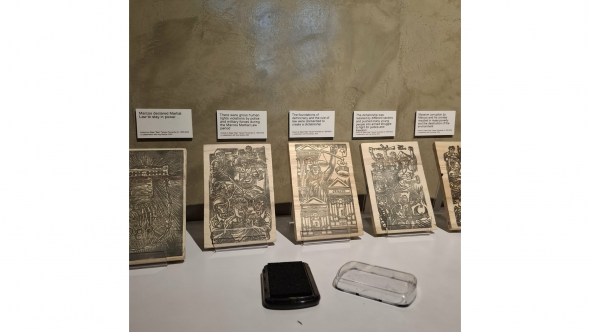
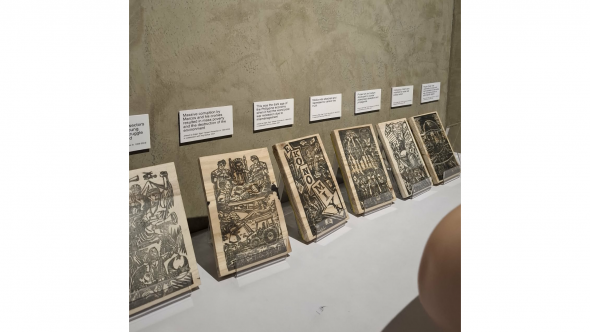
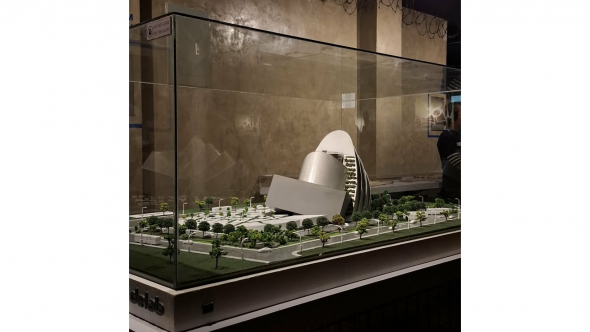
Remembering, however, must extend beyond the gallery’s walls. The Freedom Memorial Museum stands against decades of historical distortion by the Marcoses. Temporarily housed at the HRVVMC on Panay Avenue, Quezon City, the museum’s permanent home in UP Diliman remains unfinished.
Today, state violence and massive corruption continue under the son’s presidency, reminiscent of his father’s authoritarian legacy.
As Filipinos live through another Marcos era, remembering how previous generations resisted state oppression under the father’s regime is an act of tracing the roots of resistance and recognizing its necessity in the present.
If art became a powerful medium of resistance through which Filipinos resisted the fascist Marcos regime 54 years ago, may today’s technologies become extensions of that same struggle for truth and freedom.
May the powerful pieces of media we continue to consume and produce never falter in their pursuit of resistance that is both free and freeing. For as Brocka reminded in his 1985 speech, “We must produce films that will hurt, films that will disturb, films that will not let you rest. For the times are bad and, given times like these, it is a crime to rest.”
So long as art remembers the wounds of the past that cannot be softened into nostalgia or buried beneath revisionism, we must also refuse to remain silent when the conditions that once gave birth to resistance resurface 54 years later.