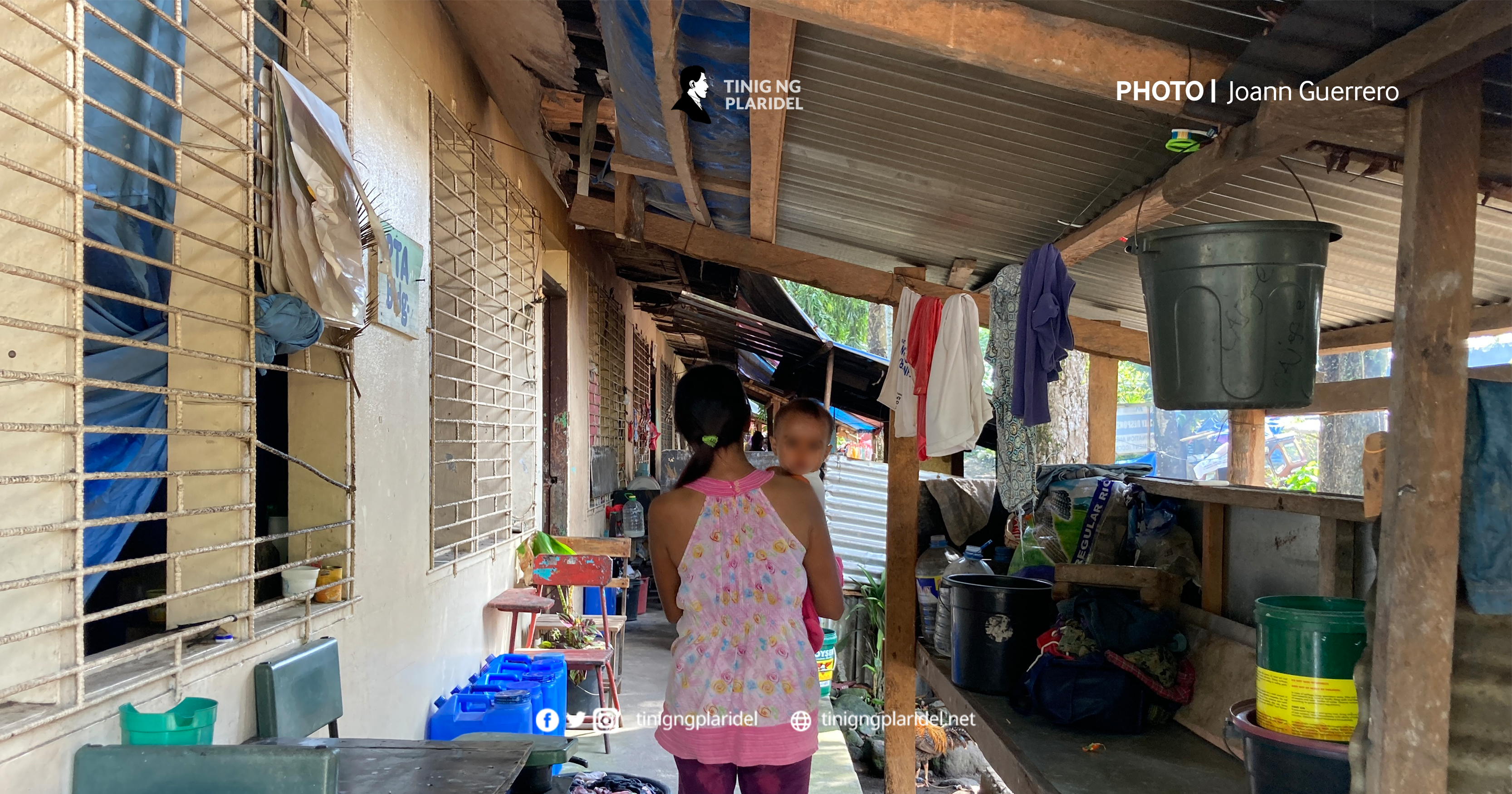
When Rowena Llantero watches the strong rainfall outside her window, scenes of a painful night flood her memories. Rainy weather reminds her not of coziness or comfort, but the start of a new life in the confines of a school classroom, where she and her family evacuated a year ago.
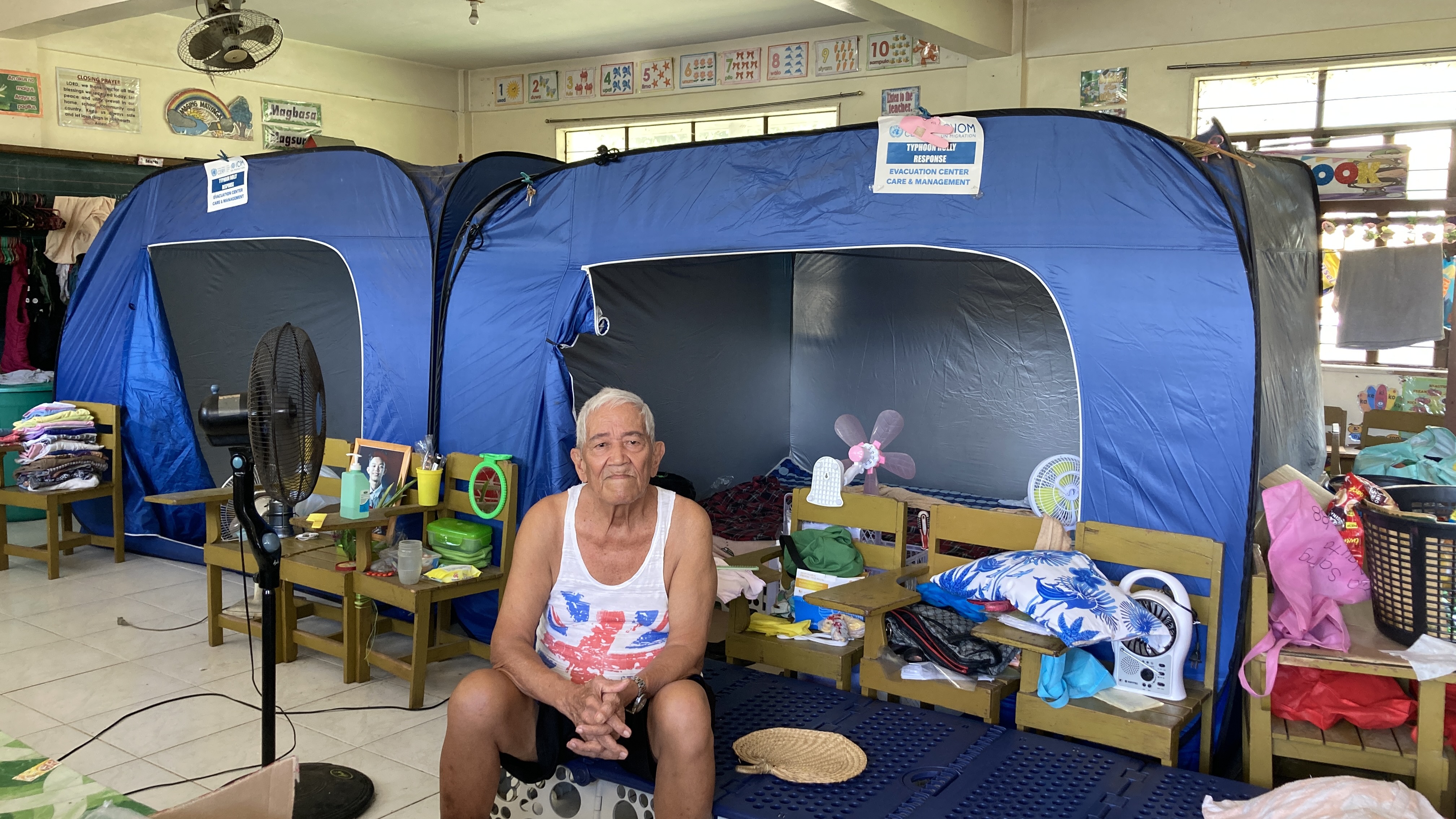
Where students used to hold physical classes, Rowena lives among other families whose homes were ravaged in the back-to-back onslaught of typhoons Rolly and Ulysses last year. While the Department of Education (DepEd) has confirmed plans to resume limited in-person classes in the coming school year, displaced residents of Guinobatan, Albay worry where they will go next.
“Kung may mapupuntahan nga lang kami, aalis na kami dito kasi mahirap ang kalagayan namin. Hindi naman kami agad makakaalis. Saan kami pupunta?” Rowena said in Bikol, her native language.
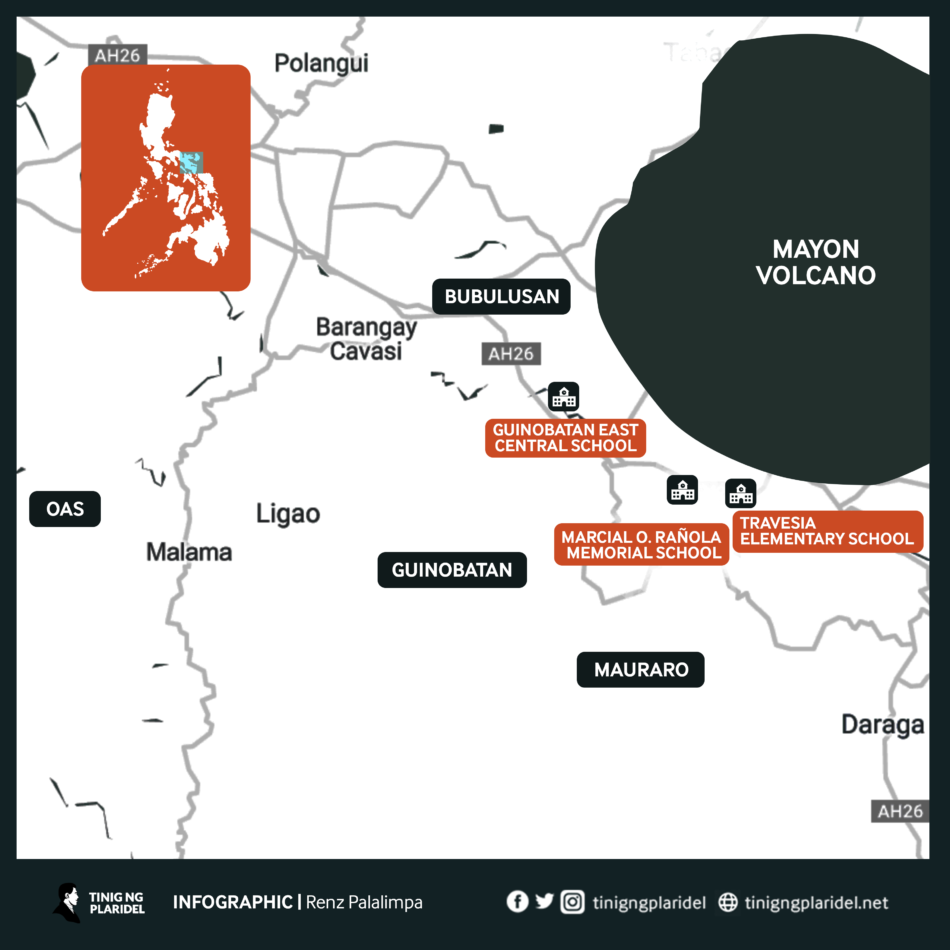
An estimated 259 other families evacuated to Guinobatan schools in November last year, with 122 coming to Marcial O. Rañola Memorial School (MORMS). Fifty-one families are at neighboring Travesia Elementary School (TES) and 36 are at Guinobatan East Central School (GECS).
As the government’s relocation projects in nearby cities are in limbo, families will remain in the same cramped classroom-turned-bedrooms. With DepEd’s vision of face-to-face learning coming to fruition, residents intensify their call to find a new home to spend a better tomorrow in.
Recounting the storm
Levi Olayta talked about that day in great detail. He told TNP how the storm howled as he, his son and grandson scurried towards the barangay evacuation site. Torrential rains brought by Rolly accelerated the volcanic ash and debris gushing down the flanks of nearby Mayon volcano, engulfing homes in roof-high piles.
How could Levi forget that day? It was the day he lost his grandson, Dave, to the storm. When they reached the evacuation site, Levi was sorrowful as he watched his son mourn over his missing child.
Dave was eventually found 20 kilometers from their home, in the neighboring municipality of Oas.
“‘Si Dave nawawala!’ sabi [ng anak ko] habang umiiyak. Nabalitaan na lang namin na nakaabot ‘yung katawan niya sa Oas … sobrang [nakakalungkot],” he recalled.
That same night, Arlyn Dapo was watching the harsh rainfall bury their home under water. With a baby of six months in her womb and three children behind her, she and her husband rushed to their neighbor’s home for safety.
“Pinayuhan na kaming umalis [ng bahay] pero mahirap kasing umalis. Hindi naman namin inasahang ganu’n kataas ‘yung baha kaya kahit umuulan kailangan naming lumusong. Kailangan naming mabuhay. Kung hindi, paano na ang mga anak namin?” she said.
When they arrived at the evacuation site the next day, they saw countless other families crowding the classroom.
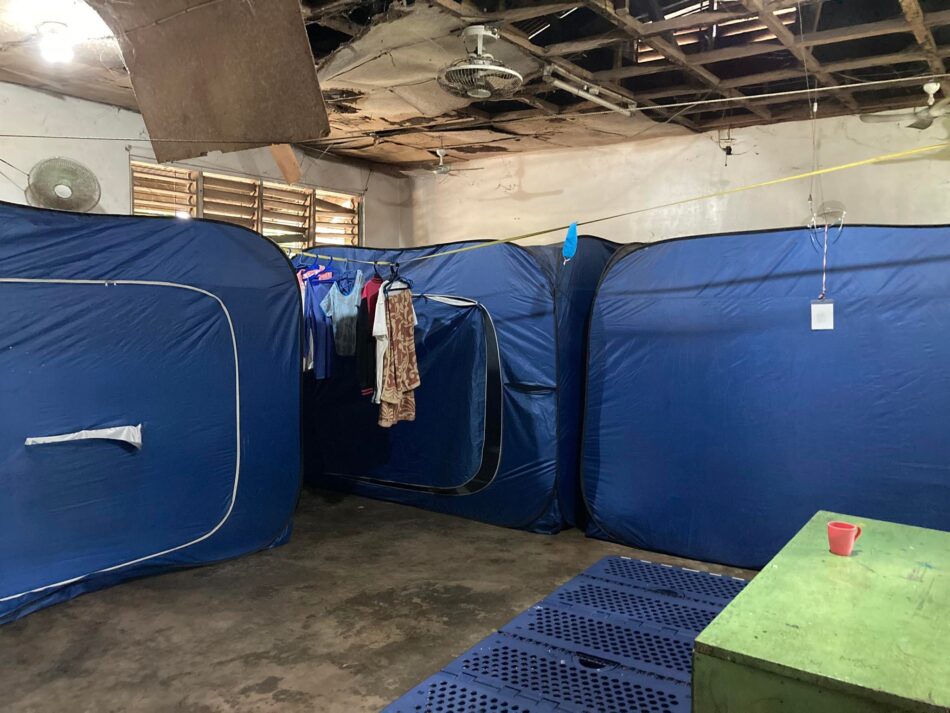
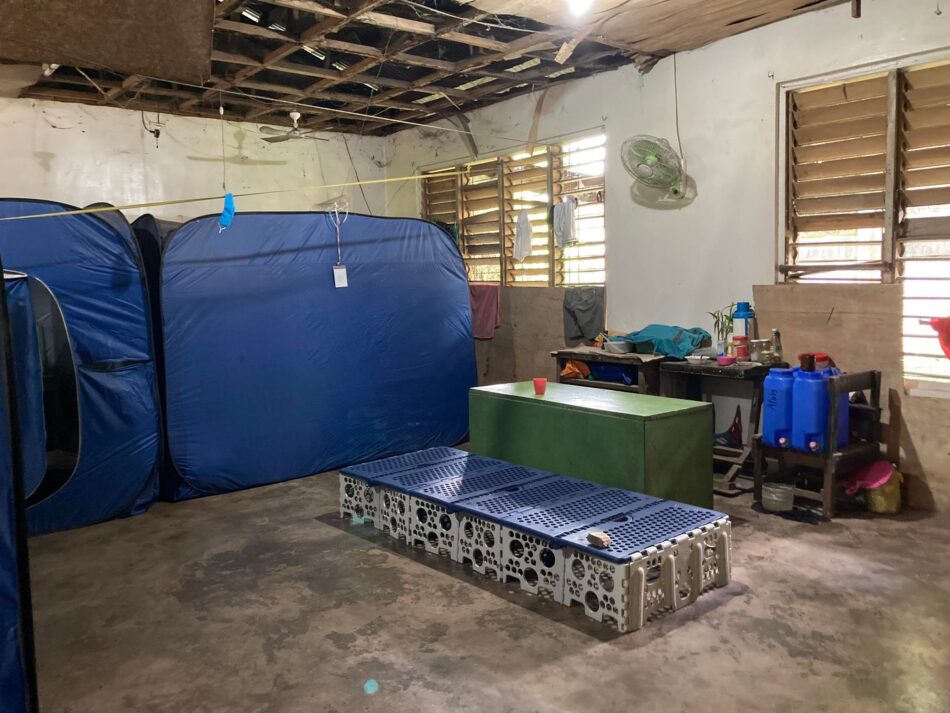
Since they moved to MORMS, she and her family of five have lived in a tiny blue tent. Ten other families live in the classroom, crammed into a space designed for only 50 students at most. It is in this makeshift home that Arlyn gave birth to Ash, who was merely a speck in her womb when they were evacuating.
For all his life, Ash has known the blue tent as his home. If relocation projects remain unfinished over the holidays, Ash would be holding his first birthday here in February, with other evacuees as his guests.

Health concerns
While residents say they are grateful for the temporary abode, grave living conditions inside the classroom pose health concerns that expose them to COVID-19 risks.
The buried homes in Travesia are now branded as “Ground Zero,” an off-limit danger zone where houses are concealed under gigantic rubble. The Department of Social Welfare and Development (DSWD) said two relocation sites were set for residents in the towns of Mauraro and Bubulusan.
The Office of the Vice President and the Red Cross Foundation worked with the Albay local government unit (LGU) to build houses that are currently either under construction or waiting for turnover to families.

Eighty-five houses are being built in Mauraro and 129 are in Bubulusan, barely enough to cover 259 displaced families who have stayed in the evacuation sites. Construction started in February last year and was supposed to finish by July, residents say. Come Christmas, they will still likely be in blue tents.
“Patapos na po ‘yung iba, halos CR at tubig na lang kulang [sa Mauraro] pero sa Bubulusan po batch by batch kasi. May mga tapos na po kaya pwede na lumipat pero may mga batch po na nagsisimula pa lang,” DSWD Head of Evacuees Lydia Mayores confirmed to TNP.
While vaccination programs are in place, the cramped evacuation sites still leave residents vulnerable to the virus, especially when social distancing and other health protocols are difficult to observe in tight classrooms.
Sites like MORMS rely on the local fire department’s water delivery service which comes every two days. Until the next refill comes, they will have stock water and manage the little supply their drums can store.

Haunted by the trauma of lost property, livelihood and loved ones, moving on is a dream the residents can only imagine every night — a dream they cannot realize in the same four walls that hold painful memories from the typhoon a year ago.
Added pressure
“‘Yung trauma po syempre nandito pa rin, hindi naman ‘yun mawawala,” said Maricel Navia, an evacuee and healthcare worker.
Rowena lost her livelihood as a kakanin vendor after losing capital and equipment. Her husband now works at the construction site in Mauraro, helping build the residents’ new houses.
Maricel said it is difficult to heal when every day, she would divide herself between work and her family’s daily needs. She also devotes time to her two daughters who are currently attending online classes.
Like many parents, Maricel looks forward to the gradual resumption of physical classes as the remote setup has proved to be difficult. But a return to in-person activities could spell trouble for survivors like her who have no place to stay in other than the classrooms they’ve been calling home.
“Kapag nag face-to-face [classes], baka paalisin na kami dito, eh di pa naman po tapos ‘yung bahay namin,” she said.
The survivors’ ability to start anew now lies in the hands of the government, who must answer to delayed housing projects amid the possible return of students to their classrooms.
As of press time, Albay is under Alert Level 2, which makes them eligible for limited face-to-face classes, subject to the approval of their LGU. Schools in Guinobatan are not yet included in DepEd’s pilot implementation of physical classes.

“Natutulungan kami dito pero gusto na namin umalis, siyempre. Kung kailangan na po talaga, aalis naman kami. Gusto ko na rin mag-school itong mga anak ko pero syempre po mahirap din dun [sa lilipatan] … wala pa pong banyo, tubig at kuryente,” Rowena said.
Mayores said the first batch of houses in the relocation sites are finished with residents slowly moving in. But for those living in the Guinobatan school, homes are yet to be constructed.
“‘Yung iba po tapos na, waiting na lang for turnover, pero ‘yung mga nasa GECS po, wala pa silang [houses sa] relocation,” Mayores said. “Inaayos na po namin ‘yung mga bahay, gusto nga po sana ng Red Cross na by January makalipat na.”
The TES administration assured one school building for the residents should limited face-to-face classes commence.
But the typhoon survivors don’t wish to stay in the same classrooms and remain trapped in painful memories, nor take away the chance for children to return to their schools. They dream of a day when they would not have to choose between either.
“‘Sana po makabalik na sa dati [yung pag-aaral] … pero sana rin po habang ‘di pa tapos ‘yung mga bahay namin, patirahin pa nila kami [sa evacuation site] kasi wala pa naman kaming ibang pupuntahan,” Maricel said.