
Every December, Filipinos become fluent in one particular word: tawad. A simple and familiar term, but one that branches into meanings that stretch across markets, streets, homes and hearts. Each is carrying its own weight during the Christmas season.
In one context, it is a response uttered at the door. In another, it is a strategy made at the stalls. And in its deepest form, it becomes a gift that takes more courage than money.
As the year closes and schedules lighten, we find ourselves wrapped not only in flickering parol lights and kids’ carols at our gate, but also in the layered versions of this word.
This may be why Paskong Pinoy remains iconic and special. It is built on tiny, practical and emotional negotiations of what we give, what we receive and what we choose to let go.
Pagtawad: To haggle
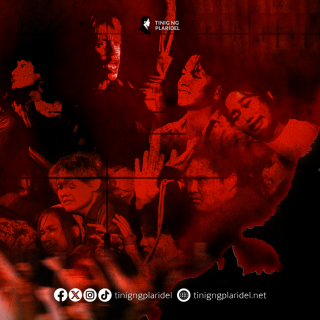
Pagtawad is the act of bargaining and making deals on the spot through negotiation and word of mouth. There is no Paskong Pinoy without marketplaces bursting at the seams, offering all the holiday rush sales and deals.
Suki here, “presyong divisoria” there, 50% sale in one corner and buy one, take one in the next. Every shop is packed with little room to pass and breathe. Long lines snake through aisles and every cashier is busy moving at pace. Shoppers clutch plastic and eco bags, vendors calling out their prices and deals over the noise, and every transaction feels like small victories both for the buyer and the vendor. Amidst the chaos, you end up getting all that you needed and even things you didn’t know you needed.
A five-peso discount through haggling is already a great deal out of pagtawad as a means to stretch the limits of your budget, especially when shopping for gifts, planning the noche buena and preparing a potluck for the reunion in the most sulit way.
Filipinos haggle more because December demands it. And for some, love and joy are measured in wrapped boxes and dining tables filled.
In this meaning of tawad, we see a different side of the season: costs, strategy and ingenuity.
This year’s Christmas may look the same, but economically, it’s different. Inflation continues to strain budgets, while wages remain unlivable for many. A P500-Noche Buena budget recommendation is far-fetched from the reality Filipinos face.
Even with tighter margins, many vendors still welcome pagtawad. In the spirit of giving, vendors and buyers meet halfway to round down prices, sealing the deal that costs nothing more than a smile, a thank you and a shared “Merry Christmas!”
The pressure to stretch every peso turns pagtawad from a cultural habit into a necessity, which weighs less about winning the haggle and more about making ends meet for Christmas as the special penultimate once-a-year celebration.
Patawad: A response
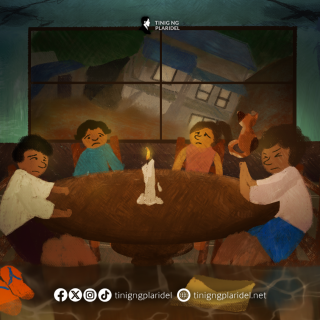
Patawad is a polite yet disappointing response to “Namamasko po,” often heard in children’s carols from your doorsteps and on the street. It’s a soft rejection that says there is no change to spare.
In this scene, patawad is an apology dressed with gentleness and consolation.
Children with tin cans for drums, improvised tambourines and rehearsed harmonies stand outside homes and jeepney steps waiting for a few coins, a bill if some felt generous, or even leftovers.
December strategically suggests open hands for giving, portraying that people are more generous at this time of the year. Hence, taking advantage of the season, children and vendors use the magic line, “Namamasko po…”
But not all doors open with generosity. Many open with a sigh, often averting gaze before dropping the response: “…Patawad.”
Reality, however, does not bend with the season. The spirit of giving does not magically fill wallets.
And for many households, patawad is not unkindness but survival spoken through apology and respect. Yet, limited by a tight holiday budget that is just enough and has little to spare.
Pagpapatawad: A gift
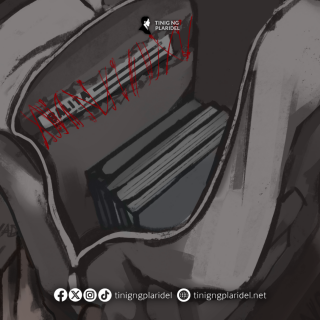
More than a season of giving, it is often heard and said that “Ang Pasko ay panahon ng pagpapatawad,” which perhaps is the heaviest application of tawad.
Pagpapatawad means to forgive. Though not a seasonal requirement, Christmas leads us to confront it, whether through giving or through asking.
Pagpapatawad asks for no receipt. It does not require taking cash out of a wallet but the unclenching of a heart that has been hurt and in rage.
Across the three meanings, tawad shares a common denominator that explains why they are defined the way they are at this time of year: because Christmas is a season of giving. And in forgiveness, the word “give” is embedded in its very form, making pagpapatawad a gift that is meant to be given.
It is not just a gift to the one who has caused harm, but an ultimate gift to the troubled mind and weary heart who has carried too much. Pagpapatawad is the gift to yourself that has finally taken a step towards letting go, to finding the true joy of the holidays.
However, like the children who sing carols for spare coins and shoppers who negotiate long to stretch a discount, pagpapatawad does not magically cover costs where they are due.
Like any gift, forgiveness is not free. It may offer rest during the holidays, but it cannot ask to forget the debts that remain unpaid and the deceptions that betrayed a nation. To forgive without truth and consequence is not kindness but complicity.
The year 2025 alone has revealed major anomalies that make loose coins a challenge to spare and discounted prices trivial for the common Filipino. An apology may never come, but accountability must still be demanded. Forgiveness, like justice, must be earned.
In this final definition, tawad becomes something transformative, making the greatest gifts not about what’s wrapped under the tree but what’s wrapped within our hearts and collective struggles..
This step paves the way to prepare for the event after Christmas; the New Year, which offers a door to new journeys and beginnings, not just for Earth’s next revolution, but also for your own evolution and the rise of a more empowered nation.
Patawad. Pagtawad. Pagpapatawad
In one month, the Filipino vocabulary uses tawad more than at any other time of the year.
We say it to children at our gate. We use it in markets and malls. We battle with it in our hearts.
Three meanings, one root. Tawad is not just a word; it reflects Christmas, which, like the word, has many meanings. More than ever, when conditions fail us, resources are scarce and restraint is heavy, all come together in one form to ‘tis the season of love, joy and struggle in a once-a-year celebration.
EDITOR’S NOTE: The original version of this article was submitted for the J122 (Publication Design and Layout) class under Felipe Jose Gonzales.