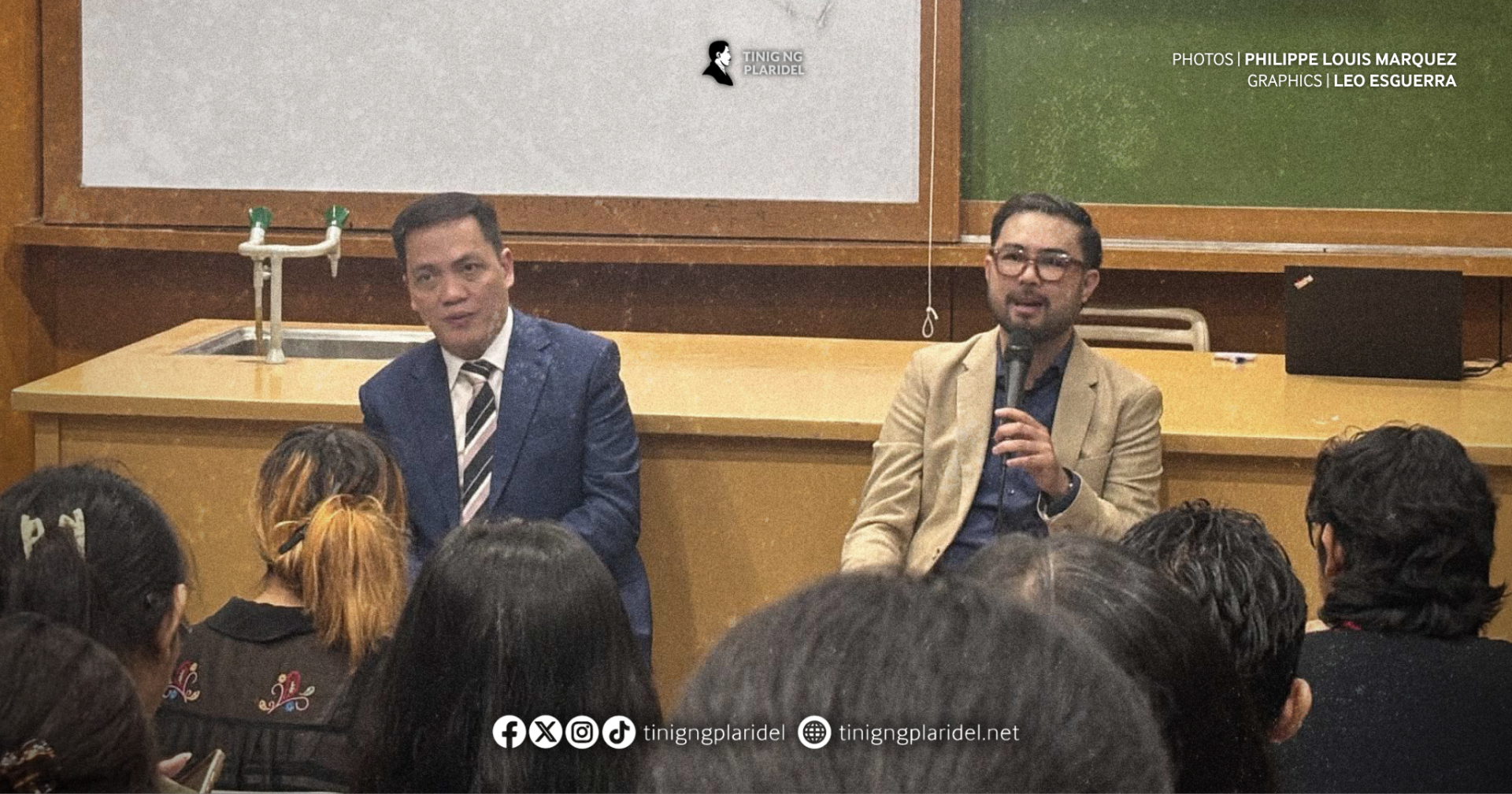
Political scientist Cleve Arguelles said that the Marcos-Duterte split is a key factor in the lack of accountability for nationwide corruption.
In a forum titled “Their Luxury, Our Misery” organized by Partido Pandayan on Sept. 19 at Ateneo de Manila University, political experts dissected the effects of the flood control scandal and the impeachment trial of Vice President Sara Duterte on the widespread call for accountability in the Philippines.
According to Arguelles, the Marcos-Duterte feud amplified public perception of the flood control scandal, leading one in two Filipinos to believe it was the most important issue in recent years.
“[Their feud] amplified the scandal,” he said. “Each camp had every incentive to expose the corruption of the other.”
Arguelles said almost half of Duterte supporters identify President Ferdinand Marcos Jr. as the primary actor, while 32% of Marcos loyalists blame government agencies and contractors.
He said that this fragmented view of the primary actor between political factions in the flood control scheme led to a lack of “consolidation of a common accountability.”
Similarly, impeachment trial prosecutor Amando “Virgil” Ligutan said this accountability issue also manifests in Duterte’s impeachment trial.
For Ligutan, accountability is a “democratic necessity” and a “shared responsibility between the [state] and the citizens.”
With the ongoing public discernment on the two highest offices, Arguelles said that cynicism becomes a learned response to political powerlessness.
He also stated that the overwhelming number of scandals in the country contributes to “political powerlessness” and the “political claustrophobia” felt by most of the public.
Dissipation of accountability
Arguelles said that the simultaneous conflict between the Marcos-Duterte tandem and their particular involvement in these issues led to a fluctuating power imbalance between the two.
He said that if Marcos were removed from office due to his alleged involvement in corruption, Duterte would then assume office as president.
“One faction of the political class [is weakened], only to deliver the state to the control of the other,” he said.
The political scientist underscored that a fear of Duterte’s presidency risked sparing Marcos from the anti-corruption campaign.
This ‘dissipation of accountability,’ as Arguelles described it, was amplified by how partisan alignment, age, region and socio-economic status were associated with differences in how people viewed the primary agent of corruption in flood control.
Arguelles cited a study their company conducted, saying the top response in Manila was the Discayas; most in Mindanao blamed Marcos, while Visayas respondents focused on Department of Public Works and Highways officials.
He said that calls to hold public officials accountable “did not necessarily bring the same names” in doing so.
Arguelles described this as an “intra-systemic conflict” that absorbed the public’s anger and the differing perceptions of the primary agent in the scandal, causing accountability to dissipate.
Despite public cynicism and the lack of united calls, both Arguelles and Ligutan urged the public to keep expressing their opinions on public platforms, emphasizing the power of public opinion.
“It’s not only confidential funds. Pera mo ‘yan, pera ng tatay at nanay mo [at] pera ng taumbayan,” Ligutan said.