Student councils across the University of the Philippines (UP) system condemned the continued restructuring of universities into neoliberal “factories for cheap labor” by forcing global standards on college general education (GE) curriculum.
UP student leaders adopted a resolution condemning neoliberal education policies, including the Commission on Higher Education’s (CHED) Reformed General Education Curriculum Component (RGECC) and the prioritization of international quality assurance frameworks at the 61st General Assembly of Student Councils (GASC) on Aug. 6 to 8 held at UP Mindanao.
“The proposed RGECC is not an isolated policy proposal but forms part of a broader neoliberal restructuring of higher education that prioritizes market competitiveness, labor export and international standards,” the resolution read.
Amid the looming university budget cuts, they highlighted that the RGECC and the continued focus on international assessments directly affect both students and academic staff with misplaced priorities and performative processes.
“Instead of addressing crises and neglect in the education sector, the state continues to favor cost-cutting measures and conforms to international standards, shifting systemic burdens onto academic institutions, faculty members, and students,” the resolution added.
Woes of curriculum reframing
In April 2026, CHED announced plans to restructure tertiary education, which included reducing the required GE units from 36 to 18.
RGECC’s pilot testing was postponed to 2028 instead of academic school year 2026 to 2027, following widespread pushback from academic groups such as the Philippine Social Science Council (PSSC). Advocates argued that the proposal threatens student development and may affect teacher employment.
WATCH: facebook.com/share/v/1BybfBeeyC/
“This shift lessens the role of the social sciences and humanities in forming socially aware and critically engaged citizens,” PSSC said in a statement.
They added that removing these courses “weakens communication education” and may lessen opportunities for the development of critical information analysis and reflective civic engagement.
“Consequently, essential courses […] face removal from the core curricula, which also weakens communication education and diminishes opportunities to develop critical information analysis and reflective civic engagement that these courses help cultivate.”
PSSC also claimed that reduced teaching loads may displace part-time and full-time faculty members, possibly leading to high unemployment rates among social science and humanities educators.
Counterproductive quality assessments
Student councils from several UP campuses decried the increased subjection to international accreditations and participation in global rankings, sharing personal accounts that highlight the counterproductivity of such assessments.
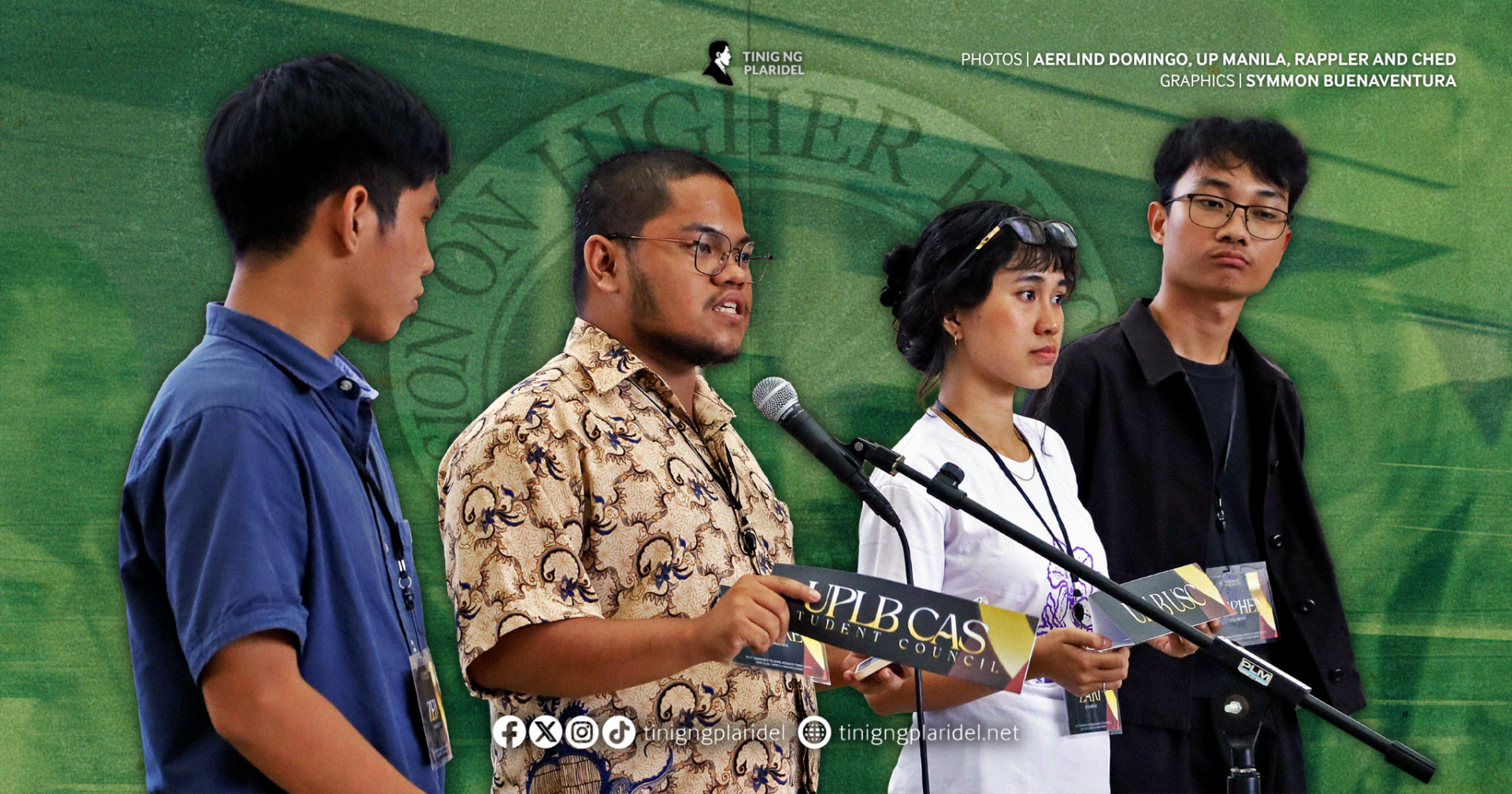
“These assessments and accreditations give emphasis on the international quality assurance mechanisms na iginigiya po ang institutional priorities towards market-oriented and globally competitive results,” said the UP Los Banos College of Arts and Sciences Student Council (UPLB CAS SC) during the resolution-building.
But instead of helping improve the universities’ quality of education, several UP units allegedly resorted to short-term strategies to obtain favorable results in international assessments.
In UP Manila (UPM), students criticized the administration’s attempt to temporarily hide their inadequate facilities and services during the ASEAN University Network-Quality Assessment period.
“May mga spaces po tayo na tinakpan lamang ng admin ng [tarpaulin] para lamang mapakita o hindi makita ng mga assessors kung paanong kulang na kulang ang espasyo ng aming kolehiyo,” the UPM University Student Council shared.
The UPLB CAS SC also gave a similar testimony, noting how their campus was noticeably more presentable during the AUN-QA assessors’ visit.
“Matapos po lumipad ng mga AUN-QA assessors papunta ng ibang bansa, bumalik na naman po sa lusak ang aming campus. Napaka-fake at napaka-performative po ng mga assessments na ito,” they said.
Following the statements of disapproval for recent neoliberal education policies, the student councils called for active campaigning towards a nationalist, scientific and mass-oriented (NSMO) education.
“The GASC shall strive for meaningful student participation in university governance by facilitating consultations before meetings of the Board of Regents, the University Councils, and other policy-making bodies whenever issues concerning quality assurance, internationalization, curriculum, or academic policy are under consideration,” the resolution wrote.
A broad, system-wide alliance across the UP system is also set to be formed and consolidated immediately “to build a coordinated front condemning and rejecting CHED’s proposed RGECC.”
This follows the same calls as the existing General Education Movement, which comprises various multisectoral groups against the proposed GE overhaul.
“Labis nating tinututulan ang paglalaan ng napakalaking budget sa mga ganitong uri ng manipestasyon ng neoliberal na edukasyon instead na ilaan ito sa mga tunay at genuine na serbisyo, equipment at espasyo para sa ating pamantasan,” UPM SC said.
UP student councils will also be collaborating with KASAMA sa UP, the offices of sectoral regents, student organizations and other progressive groups in campaigning for an NSMO education through educational discussions, consultations and position paper writing.
The resolution’s proponents are the UPLB College of Arts and Sciences Student Council and the UPLB USC.