
Campus journalists have killed the farce of media objectivity. Where state plunder washes billions away, they wade straight into the muck.
They have refused to detach themselves from the collective struggle against government corruption. They know better than to stay in classrooms when state forces brazenly harass fellow youth on the streets.
The campus press has locked step with the youth movement. And it would not apologize for siding with the masses it serves and comes from.
In this 2025 edition of our appreciation list, Tinig ng Plaridel editors compiled their favorite stories and multimedia works from our fellow student publications.
To our colleagues, we thank you for stepping up to the critical tradition of campus journalism.
Tinig ng Plaridel
Sam Arinto, Multimedia Editor
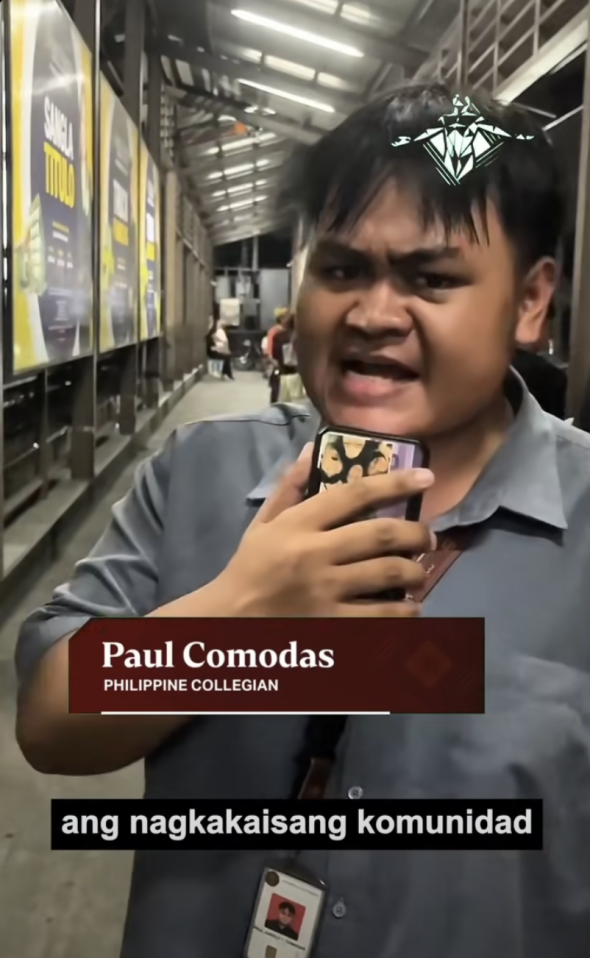 Top Pick: PUKSAAN NACH!
by Paul Comodas (The Philippine Collegian)
This year posed a challenging coverage for corruption-riddled issues amid exposés of flood control anomalies. The role of truth-tellers has ever so become a testament of stamina and commitment against agents of mis- and disinformation. And when clicks and attention are the currency, sustaining audience engagement is key.
Kulê’s daring approach to covering the youth’s persistent militancy may not be traditional, but it is a dire need for journalists. Keeping in touch with trends and pop culture, embracing humor and connecting to people on-ground and online become fundamental skills for us truthtellers.
Breaking through the stoic seriousness of so-called news is the future of multimedia storytelling, and it is essential to keep people informed — all while entertained.
Bonus Picks:
MARCOS JR. AT DUTERTE, RESIGN? SINO ANG PAPALIT? by Rachelle Montes (The Manila Collegian)
EX[P]LAINED | The Flood Control Fiasco by Sydney Luzande (UPLB Perspective)
Pasko Noche Buena Animation by KEdullantes (Himati)
Trisha Nasam, Graphics Editor
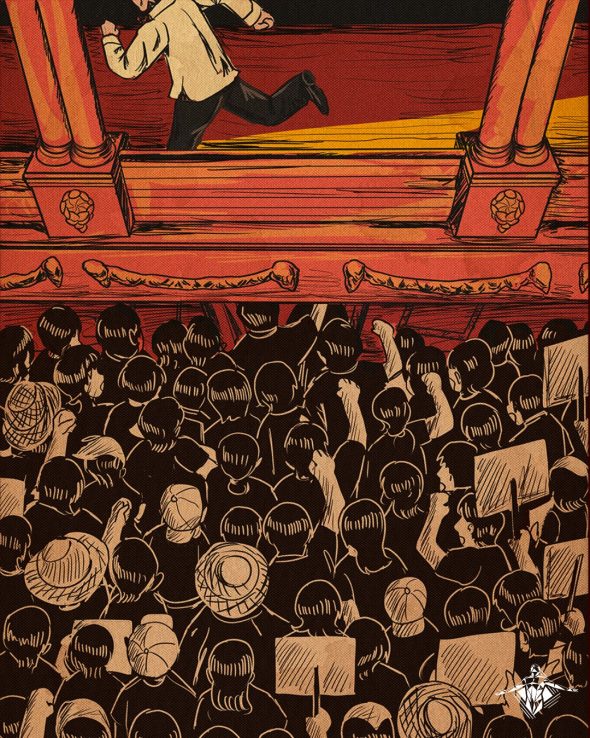 Top Pick: Nov. 14 Anti-corruption Illustration
by John Paul Paulino (The Philippine Collegian)
Months into the Palace’s flood control corruption probe, accountability remains in a drought, as high-profile officials involved are yet to be put behind bars. Justice continues to be eroded with a toothless system in place. Yet, people refuse to wait for action. They demand it. They take it to the streets — even to the center of power itself amid heavy police presence.
The Philippine Collegian’s Nov. 14 anti-corruption illustration shows people marching presumably towards Malacañang with fists clenched in the air and some bearing placards, leaving the person donning a barong outnumbered, with no choice but to flee.
The illustration captures the form of resistance the ruling class has long tried to keep us from — one that rejects the notion that change comes in peace and blind compliance.
The piece is a striking visualization of how the people’s collective power can topple plunderers and greedy elites. In this work, Kulê makes tangible the essence of art: to disturb the comfortable.
Bonus Picks:
Oct. 26 Peasant Comics by Tug-ani
Bandalismo? by UPLB Perspective
Milyones, Isang Daan by Reggie Omac (Tinig ng Plaridel)
In UP, Dissent Finds Form in Spray and Script by Chiara Valenzuela (The Philippine Collegian)
Patricia Fontilar, Photo Editor
 Top Pick: Ika-53 Anibersaryo ng Batas Militar
by Lorence Lozano, Raicelle Alvarez, Lemuel Pabalan, Jay Janubas, Jo Espiritu and Sarah Gates (The Philippine Collegian)
As the terrors of the Marcos-Duterte administration continue to haunt the nation, the masses are left with no choice but to resist. This collective stand was on full display in this year’s commemoration of the declaration of Martial Law, with thousands of Filipinos carrying their calls for justice and accountability to the streets.
In its Sept. 21 protest coverage, the Philippine Collegian fully captured the power of the people as they unified to make their pleas heard. Its photographs serve as a striking reminder of the widespread human rights abuses that happened 53 years ago and their lingering effects that continue to haunt the country today.
Amid the climate of fear and looming threat of state violence, Kulê’s photoset immortalized the pent-up outrage that had finally erupted into the open, bearing witness to all those who stood on the right side of history.
Bonus Picks:
Loom of the Grassroots by Mike Molina and Ennaira Louisse (Outcrop)
Who do we drown in the sail to progress? by Mariel Jan Gudito and Nixie Pepito (Lanog)
Nasaan si Santa? by Eulysis Bino Andoy, Joanna Del Rosario, Ryden Dela Paz, Jhon Laurence Eso, Regine Mae Evano, Ronalyn Hermosa, Alexa Sophia Joson, Gian Daniel Mesina, Paulene Monterde, Karyl Rael, at Loraine Anne Pujeda (The Catalyst)
Raine Kho, Sports Editor
 Top Pick: Sowing the seeds of grassroots programs for a thriving Philippine sports ecosystem
by Carmela Angeles, Diego Cordero and Bourgy Go (The LaSallian)
In a year filled with breakthroughs and developments in Philippine sports, one thing remains: the need for a clear grassroots program planning. This year, Alex Eala inspired many Filipinos to pick up a tennis racket. The Philippine National Women’s Football and Beach Volleyball teams brought home historic gold medals for the country. But despite the accolades and the recognition, many young Filipinos lack access to do the same.
The LaSallian explains and explores the grassroots sports crisis in the country, exposing the disconnect between the country’s celebrated sports culture and the fragile systems meant to sustain it. With interviews from practitioners involved in sports development, the article pieces together the problem and its consequences for the development of Filipino athletes.
For the sports ecosystem to be developed from the ground up, there must be a rework of the system. Prioritize building accessible spaces, starting with community parks, track ovals, and facilities where everyone can access their potential.
Bonus Picks:
September 26 UAAP women’s basketball refs pay gap by Go Hard Girls
Luha at pawis: Bawat patak ng pag-indak sa Bayle sa Kalye by Maryrose Alingasa (Tanglaw)
She, the GOAT by Anna Carlos (Tinig ng Plaridel)
The crowd they left out: Subsisting silence in international tournaments by Jules Aranjuez and Sophia Bautista (The GUIDON)
Donavie Gud, Features Editor
 Top Pick: Crimson Horizons
by AVPanong (Himati)
We often witness protests through pictures and videos. Only occasionally do they appear in written articles. This is understandable since capturing the intensity of a protest with words alone can be difficult. But AVPanong’s Crimson Horizons proves otherwise. Their presentation of the Mendiola protest was powerful and vividly narrated.
The story centered on the color red to portray the life of protest and it succeeded in doing so. Red was not only described as the hue of defiance but also the color of attacks against those who resist.
What happened in the Mendiola protest on Sept. 21, held to commemorate the declaration of Martial Law in the Philippines, is marked with violence. And mainstream media framed it negatively, dismissing it as “riot,” ignoring police abuses against protestors. Crimson Horizons resisted this brainwashing narrative. It documented the number of arrests. It detailed the attacks carried out by authorities.
The article painted the protest in crimson. It is the kind of story society needs now more than ever.
Bonus Picks:
Aswang sa Kapitolyo: Mga Kwento ng Tunay na Kababalaghan ng Bayan by Erika Ularte (UPLB Perspective)
Hindi Lahat ng Naghihirap ay Naliligaw by Ron Michael Delfin Trinidad (The Manila Collegian)
After the Waters Recede: Voices from the Flooded Streets by Jae Juson (The Communicator)
Justin Boncodin, News Editor
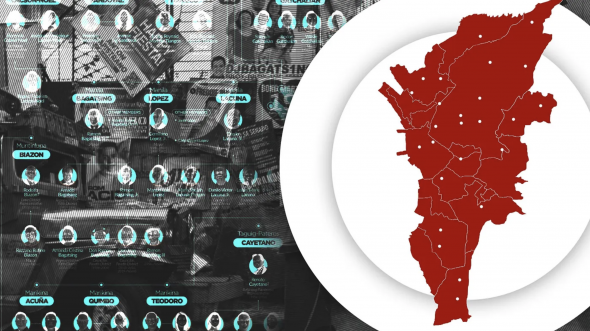 Top Pick: The Roots of Local Dynasties Entrenched in Metro Manila
by The Manila Collegian
Among the countless disasters that struck the country in 2025, corruption in government defined the news cycle. Exposés of corruption in government took the nation by storm, leading to widespread unrest among Filipinos for justice and accountability.
But a closer look will reveal that corruption is neither a natural phenomenon nor does it happen overnight. The Manila Collegian’s report on political dynasties highlighted how corruption can take root when political power is concentrated in the hands of a select few elite.
In the lead-up to the 2025 midterm elections, the Manila Collegian mapped the roots of local political dynasties entrenched in various cities across Metro Manila. It highlighted how political families holding positions in national office can be traced back to their decade-long rule in local government. By also focusing on dynasties in Metro Manila, it offered a local lens to what is commonly viewed as a nationwide issue.
MKulê’s report showed how even one family, despite being known as the smallest unit of society, has managed to monopolize political power and influence across generations. The use of a family tree rhetoric and diagram not only shows the irrefutable ties among the members of the family, but also the inherited accountability for systemic corruption.
Bonus Picks:
Walang Umuuwi Nang Tuyo sa Hagonoy by Airi Martin, Rustom Rizo, and Regina Shane Lopez (Pacesetter)
Cebu areas severely flooded by “Tino” had multi-million peso flood control projects by Kian Razonable (Tug-ani)
Chancy Yet to Decide on Any SH Case Against Student Orgs Since 2019—OASH by Vyan Abella (The Philippine Collegian)
Seven Fangki, Finance Manager
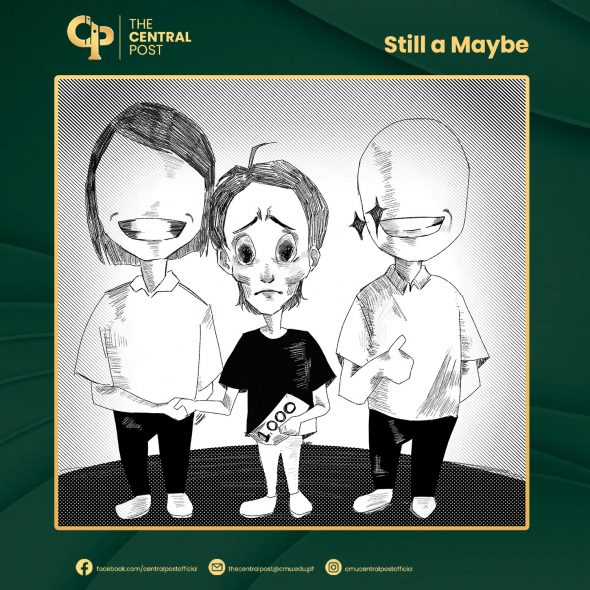 Top Pick: Still a Maybe
by The Central Post
The editorial “Still a Maybe” offers a sobering critique of precarious labor within state universities and colleges, using the case of long-serving ‘job order’ workers at Central Mindanao University (CMU) to expose a broader structural and bureaucratic injustice. The editorial grounds its arguments in legal and policy frameworks, highlighting how the Civil Service Commission, Commission on Audit, and Department of Budget and Management’s joint circular constraints workers like Quion.
The piece further compelled its intervention by refusing to treat legality as a moral justification. Comparing institutional compliance with the lived experiences of decades-long insecurity, it underscores how policies meant to regulate labor have instead made exploitation a valid and “legal” practice in the workforce. It inquires when “temporary” labor ceases to be temporary in practice.
The Central Post succeeds in reframing recognition as insufficient without structural reform. Its critique of the romanticization of labor, particularly through symbolic gestures and social media gratification amidst Filipinos’ financial struggles, limited job opportunities, and rising cost of living, is timely and incisive. Still a Maybe upholds the argument that while dedication is repeatedly celebrated in rhetoric, it has always been denied in policy. The publication calls not just for empathy but for just and sustained pressure toward genuine labor reform.
Bonus Picks:
Who Regulates the Rent? by Rayu Peralta (UPLB Perspective)
A Table Made of Almost by Charles Perolino (Silahis)
We’re Rich on Paper, But Why are We Still Hungry? by Areej M. Aguam (Mindanao Varsitarian)
Richardson Tubo, Managing Editor
 Top Pick: If We Did It Before, We Can Do It Again. History Calls. Will we answer?
by Himati
The streets have been busy for the past few months of state corruption revelations. Since then, the roads have never been more crowded with people after the EDSA People Power in 1986.
More feet have walked the same road they once took to oust the late dictator. Louder chants echoed the alleyways, leading up to government offices. New faces were seen in the movement as they have come to realize the evil deeds greed has done.
However, Himati reminds the masses that the battle does not end with merely replacing those who are currently in power.
Taking out a few bad seeds does not secure the land with a bountiful crop. Instead, the article enjoins people to attack the very system that continues to cause the drought.
Holding corrupt officials accountable is a must. Government transparency is a basic requirement.
Himati’s dissection of the Philippine history has paved way in shedding light on what the revolution has failed to take out — political dynasty and systemic rapacity.
Decades after the 1986 People Power, Filipinos are still left “grappling with the same challenges that fueled the revolution nearly four decades ago.”
Indeed, history will repeat itself if the corrupt system remains.
During this historic sign of the times, we have another shot at universal equality. If we did it before, we can do it again.
Bonus Picks:
Catholic groups demand scrutiny over ?8.1-billion NTF-ELCAC budget by ZMalabute (Himati)
How an Infant Tastes HIV Medication Before Breastmilk by Chester Leangee Datoon (The Manila Collegian)
Flood Control Contractors Manage Most of P2.5B Delayed UP Diliman Infrastructure by Reg Dipasupil (The Philippine Collegian)
Lau Bacia, Associate Editor
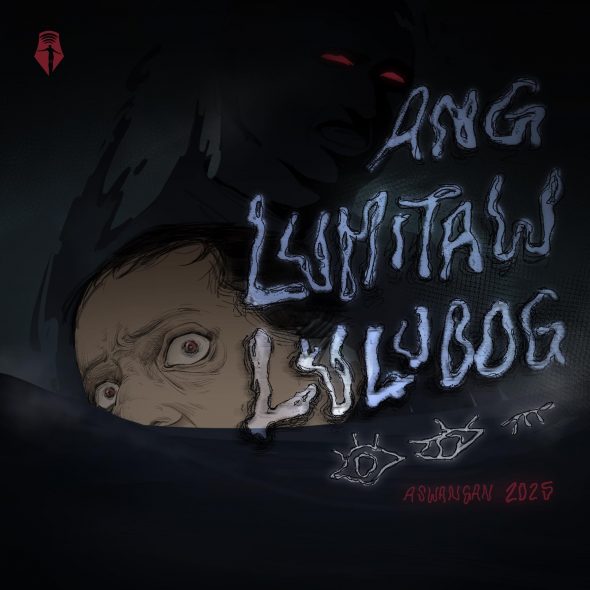 Top Pick: Aswangan
by Tug-ani
Student journalists must no longer succumb to the pressure to play neutral. Let us call a spade a spade. No more holding back in confronting the powers that be. Not when our future is on the line.
As the public turns its attention to the widespread government corruption plaguing this nation and its coffers, we, as storytellers, are called upon to translate billion-peso figures into narratives that resonate with our readers. Such allows for better public understanding of the real-life effects of corruption on our classrooms and our communities.
UP Cebu’s Tug-ani did exactly that through its courageous social commentary series “Aswangan,” which likened those who have bastardized our people’s trust to the monsters of Filipino folklore.
As a reader, I appreciated how the series creatively drew from Filipinos’ shared cultural imagination to show how corrupt officials sucked our people dry and left them deprived of the dignified lives they deserve.
Just as the series said, greed knows no limits for these modern-day aswang, and neither should our resolve to expose the blood trails they leave behind.
Bonus Picks:
“Unsa napod ako kan-on ugma?” by Frances Ocba (Lanog)
Dikta ng masa by Tanglaw
LIST: Status and Contractors of All UP Diliman Infra Projects by Reg Dipasupil (The Philippine Collegian)
Andre Esguerra, Editor-in-Chief
 Top Pick: Ilonggos bear brunt of faulty flood control and infrastructure projects
by Stephanie Juntilla and Joshua Ticot (Pagbutlak)
Pagbutlak’s hyperlocal news delivers on community media’s promise of cutting through the noise in the Metro by exposing underchecked flood control anomalies from the Ilonggo condition.
It delivers a sobering reminder to mainstream journalism and anti-corruption movements: state plunder has metastasized far wider than headlines could tell.
If we are to smoke out corruption, both media and movements must embed themselves in grassroots communities, such as fisherfolk and farmers, to gather more ground truths as a basis to force systemic change. The state cannot be trusted to do this. Collecting evidence now falls to the collective struggle of press and public.
Government corruption can never be overreported, but we should refine our strategies. We must set the agenda around rights-holders as much as we interrogate duty-bearers. Pagbutlak understood this task.
Bonus Picks:
Buried Pleas under a Rising Shelter by Zarelle Villanzana and Genno Rabaya (The Weekly Silimanian)
Sa lupang binungkal, sumisibol ang pag-asa’t pakikibaka by Leonard Magadia (Tanglaw)
Farmers, native groups bear fruits of Del Monte Philippines’ century-long exploitation by Hermione Mangundayao (The Manila Collegian)