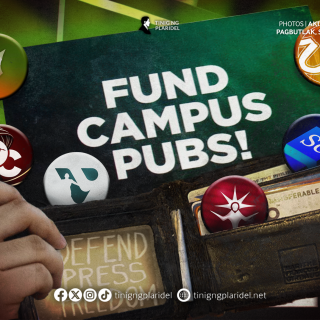
Student publications across the University of the Philippines (UP) System continue to face online harassment and social media censorship over their critical reportage, according to their second semestral reports for A.Y. 2024 to 2025.
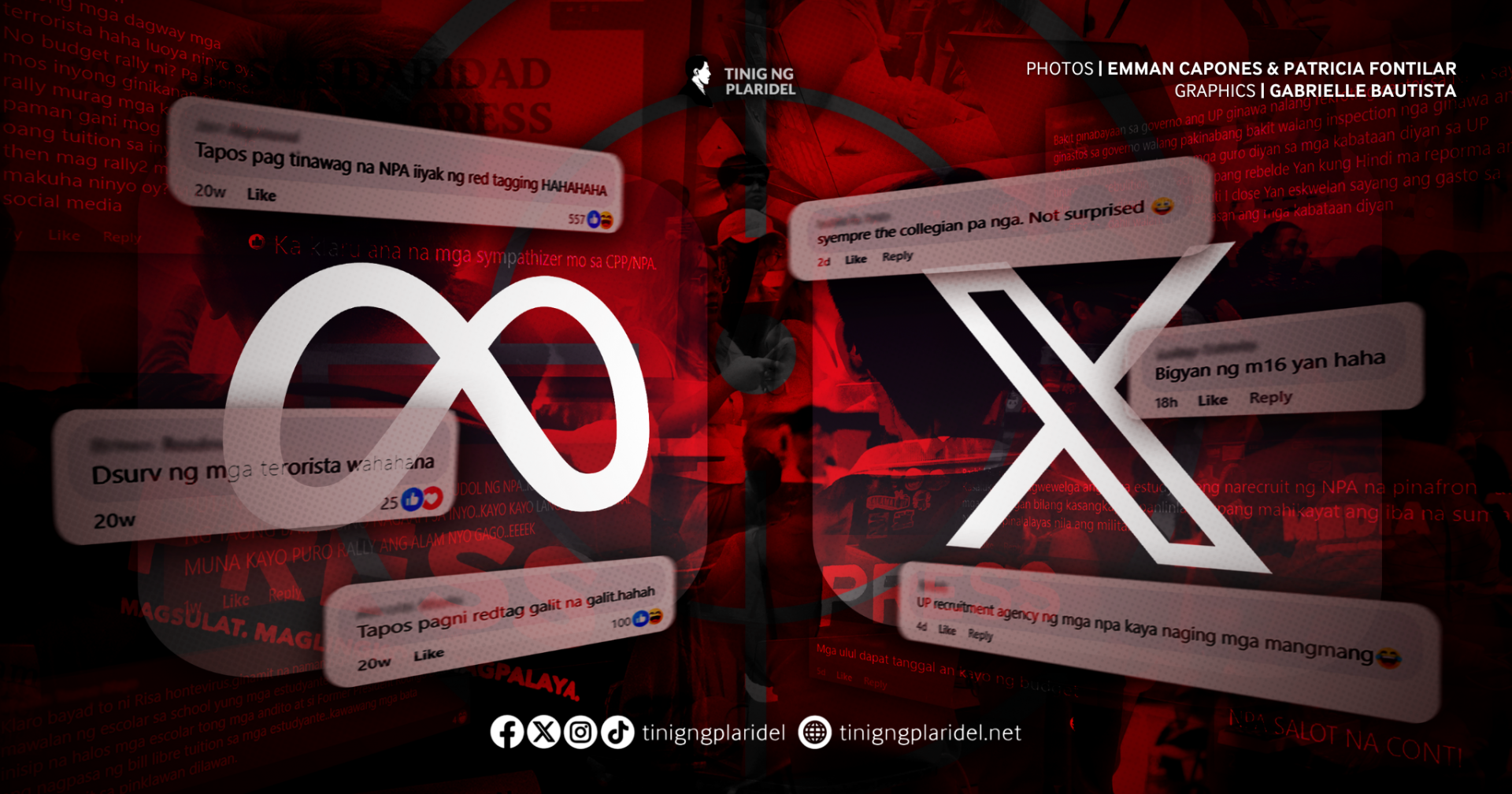
The attacks — ranging from content takedowns to red-tagging — have forced member publications of UP Solidaridad to limit who can comment on their posts as a safety precaution from online threats.
UP Solidaridad is the systemwide alliance of student publications and writers’ organizations in the university.
In its semestral report at the 2025 UP Solidaridad Biannual Congress, the Philippine Collegian (Kulê), UP Diliman’s (UPD) official student paper, recounted an instance when Meta took down its video coverage of the 56th founding anniversary of the New People’s Army.
Meta alleged the post violated its community guidelines prohibiting content with “symbols, glorification or support of people and organizations” the company defines as “dangerous.”
When the publication condemned the “brazen act of censorship” in a Facebook post, online trolls flooded the comment section with threats and harassment.
Some falsely labeled the publication as a “mouthpiece of the left” and claimed it did not possess the right to free speech, forcing Kulê to disable commenting.
Online attacks on Kulê are not isolated incidents, as other UP-based student publications have reported similar experiences.
Trolls swarmed a video of a lightning rally posted by UP Baguio Outcrop during the university’s 2025 commencement exercises on July 22, prompting the publication to disable commenting for “security reasons.”
Danaya Marie Victorino, the publication’s officer-in-charge, said it was important to ensure the safety of Outcrop’s staffers and the graduating students who appeared in the video.
“[I]niiwasan din namin dahil … sa panahon nga ng lumalalang krisis sa Pilipinas, mas mainam na mas malakas din ang pwersa ng [publication], lalo na rin at [alternative] media rin ang [Outcrop] bukod sa student [publication],” Victorino told Tinig ng Plaridel.
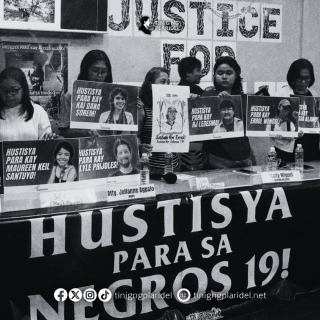
Meanwhile, UP Cebu’s (UPC) Tug-ani, which was already facing interventions from the university administration, has also faced red-tagging following its report on the death of “Kabankalan 7.”
RELATED: Publications across UP continue to face admin intervention
On April 27, seven individuals, including UPC alumna Dee “Ka Dahlia” Supelanas, were killed by state forces at Kabankalan City, Negros Occidental.
Two of Tug-ani’s Facebook posts on the tragedy have comments turned off due to troll attacks. Ritzie Daniel Lao, the paper’s outgoing editor-in-chief, said the remarks showed a “clear intent to attack the publication, red-tag members of [the] community and even drag the entire university into baseless accusations.”
“As a publication committed to serving the people, we cannot allow our platforms to be used as channels for harassment, intimidation and disinformation,” Lao told TNP via correspondence.
She said turning off the comment section is not about avoiding public criticism, as the publication values critical opinions. But she stressed Tug-ani will not tolerate malicious harassment.
“[M]alinaw din sa atin na may hangganan ang kritisismo. Kapag ito’y naging kasangkapan na ng paninira, pangha-harass at red-tagging, hindi na ito bahagi ng malayang talakayan kundi bahagi na ng sistematikong atake para patahimikin ang tinig ng mamamayan,” Lao said.
UPLB’s official student publication Perspective has also been subjected to red-tagging through an anonymous entry to the UPLB Freedom Wall. The post remains online as of press time.
While its editors said they were concerned over the red-tagging, they decided not to engage with it.
“[M]as pinili naming huwag mag-engage sa post dahil [mabibigyan] lang [ito] ng traction,” Perspective’s associate editor John Michael Monteron told TNP.
“Mas binigyang-diin din namin sa staffers namin na sa mga ganitong sitwasyon, mas dapat paigtingin ang malaya at makamasang pamamahayag,” Monteron added.
During its coverage of the 2025 midterm elections, the Perspective also reported a surge of trolls in its comment section.
Several other UP-based student publications reported experiencing the same.
In 2022, some online users wrongly said Sinag, the official student publication of the UPD College of Social Sciences and Philosophy, was being “infiltrated” by far-left revolutionary groups.
In UP Manila’s College of Arts and Sciences, Ang Tagamasid reportedly lost access to its official Facebook page due to a login attempt by an “unidentified” entity.
Such are recurring experiences for UP-based student publications. During the 2024 UP Solidaridad Biannual Congress, they called for the urgent enactment of the Campus Press Freedom (CPF) Bill, which would impose stronger sanctions on perpetrators of CPF violations.
READ: UP student pubs demand passage of campus press freedom bill
A year later, the Philippine Congress has yet to pass the measure. The bill has been languishing in legislative limbo for 14 years since its first filing in 2011.
READ: 13-year-old Campus Press Freedom Bill at risk of being shelved once again in Congress
The College Editors Guild of the Philippines (CEGP), the broadest alliance of Philippine-based student papers, reaffirmed its stance against various forms of press freedom repression.
“[R]estricting student publications on its critical reportage only blocks the people’s right to information even in our digital platforms. More so, we criticize Meta for tolerating disinformation and terror-tagging proliferated by state-funded organizations that are untruthful and dangerous,” CEGP national spokesperson Brell Lacerna said.
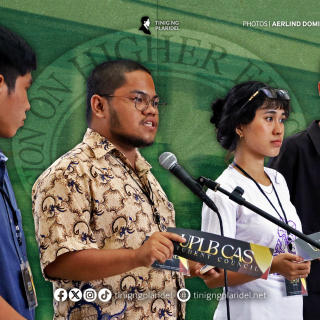
The 2025 UP Solidaridad Biannual Congress was held at UPLB from Aug. 4 to 6, convening all UP-based student publications to share their press-related challenges and deliberate on resolutions expected to be implemented in the upcoming semesters.