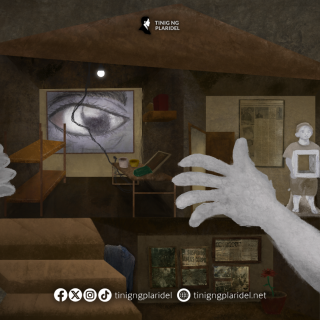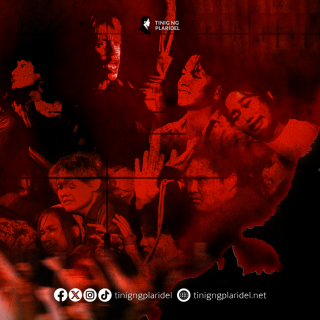
Within a small and dim set not much bigger than a classroom, bodies are packed almost uncomfortably close to each other. Each hushed murmur of conversation brushes against the flesh.
The flashing cameras pulse like a heartbeat, elongating trembling shadows that stretch across the assembling performers and the waiting audience. The stage feels haunting and electric even before the performance begins.
The darkness itself feels alive and pressing. It prepares the viewer to confront what usually stays concealed.
In its 53rd season of theater-making, the University of the Philippines Repertory Company presents Pagkagat ng Dilim — a twin bill play of Aswang as You Love Me by U.Z. Eliserio and Deliberi by Jasper Villasis — that explore the collision between violence, sexual desire and sociopolitical issues.
It is a brief yet compelling back-to-back performance that reminds its audience of the power of darkness to affect, pierce and expose our naked selves more fully than light ever could.
From Domestic Drama to Social Horror
Directed by Manuel Mesina III, Aswang as You Love Me is a satirical comedy that depicts the anniversary of a married couple: Bebang (Lotlot Bustamante) and Badong (Jers Rei Guiva).
Set in the dining room of their home, a seemingly delicate opening of the couple, initiating playful and casual interactions with each other, becomes a heated argument when Badong refuses Bebang’s attempt at intimacy.
The cracks in their marriage immediately surface as affection is replaced by wrath and accusations over cheating and fragile insecurities. Their relationship is evidently neither blooming nor securely established, but extremely worn out by years of resentment sustained by routine and familiarity, yet profoundly decaying internally.
Throughout these exchanges, Bebang appears larger than life, a force of nature that deftly shifts between ferocity and comedy, while Badong bursts with authority, anger and vulnerability in equal measure.
The interruption of Badong’s philosophy major student Carlitos (played alternately by Chris Joseph Junio and Donny Tierra) further intensifies the tension and slowly descends into a whirlwind of desire, suspicion and chaos.
As he seeks advice regarding shifting programs, Carlitos brings forth the image of fresh-eyed student youth, radiating innocence and curiosity. Amid a couple trapped in a stagnating, unfulfilling marriage, his energetic and unguarded outlook on life becomes precisely what draws both Bebang and Badong toward him like moths to a flame and drags him to a wicked game of seduction and violence.
They saw Carlitos as a respite and an opportunity to indulge their repressed urges, all the while slowly unraveling the fragile balance of control and secrets that govern their lives.
With its stellar cast moving at a breakneck rate as they swoop in and out of the wooden set, the action is unwavering and the sense of danger and chaos feels relentless.
Interwoven with the volatile personal drama between Bebang and Badong, which plays out in the presence of Carlitos, are bursts of intellectual debates, touching on topics such as Palestine, imperialism, colonial mentality and Philippine politics. These lend the play weight further amidst its comedic one-liners, sexual escapades and budots dance intermission after its climax.
The proximity of the audience to the main characters heightens the suspense and intensity for each dialogue and physical and sexual confrontation that unfolds mere steps away. From Bebang and Carlitos having sex whenever Badong leaves the stage to take care of their wailing child to Badong finally catching them in the act, brandishing a gun and mocking Carlitos’ fright and naivety with a sense of frigid dominance and amusement.
All this mounting buildup culminates in a monstrous revelation of the married couple as aswangs whose conflicts were intentionally staged as a gimmick for their anniversary, with Carlitos presumably doomed to be their next victim.
With this revelation, the viewer witnessed how the aswang transforms into a symbol of the moral degradation of the intellectual elite, with its insatiable appetites and dual nature becoming a reflection of the elite’s own behavior — publicly respectable by day, yet manipulative and predatory in pursuit of their desires by night.
Ultimately, Aswang as You Love Me leaves valuable insights into the subtle yet widespread corruption of the venerable, refined and authoritative figures within society, of those implicated in repressive structures.
Labor, Love and Survival
Underneath the darkness that the powerful use to hide their ravenous greed and wickedness, the marginalized, too, live in the shadows, although theirs are cast by fate rather than volition.
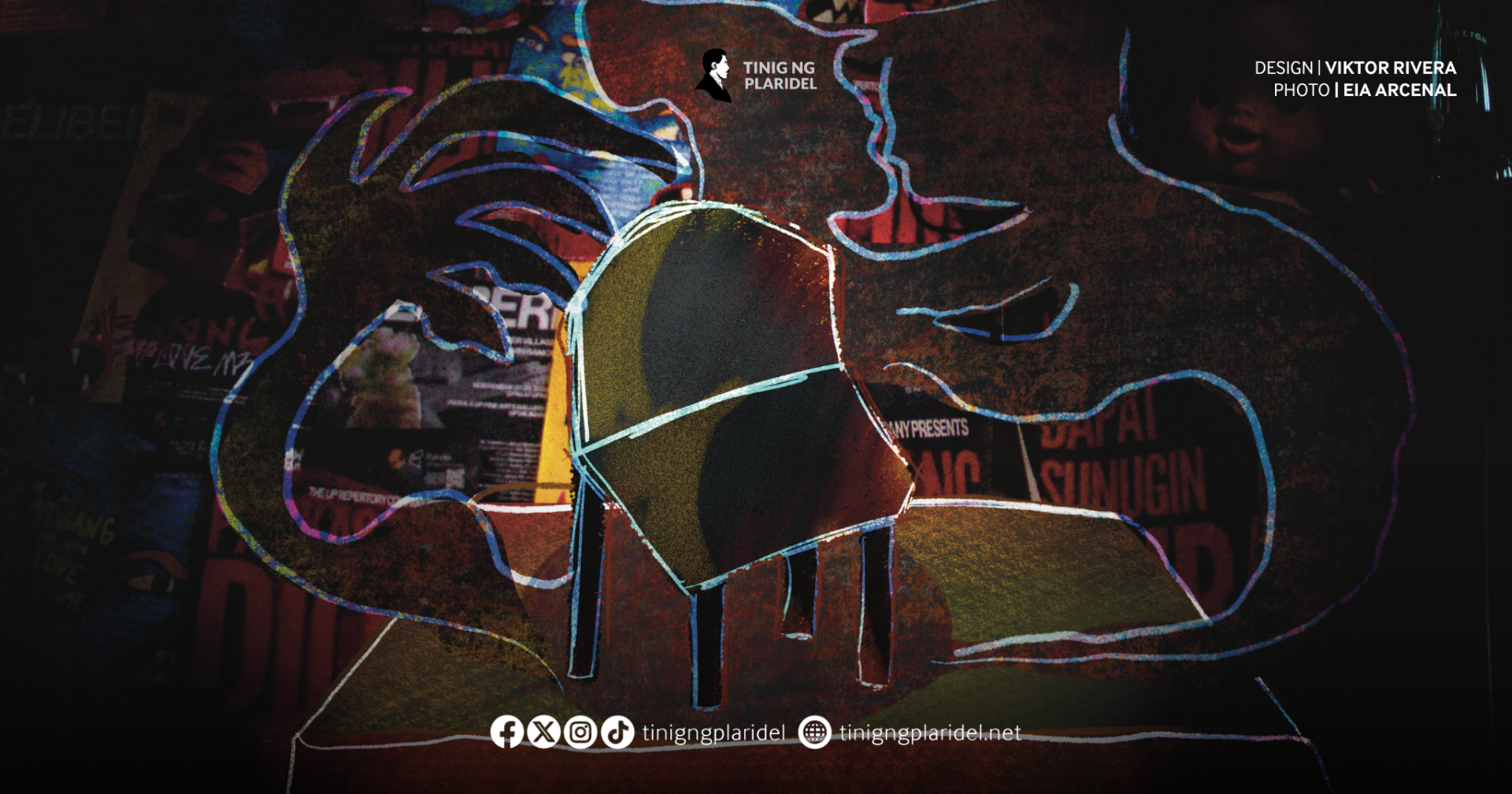
Deliberi, directed by Vin Ramos, brings one such obscured figure into focus, as a solitary delivery rider stealthily enters a set that consists of nothing but a single chair and a beer, far from the dramatic tempo and tone of performance that preceded it.
Much more solemn and shorter than the first piece, Deliberi is a delivery rider’s (played alternately by Mattheo Wovi Villanueva and Kuki Zinampan) monologue on his life and sentiments about a world that appears hell-bent on ignoring and exploiting people like him.
Delivered in an informal, candid style, as if merely confiding to a barkada, the rider brings up the personal, daily events that shape his life: the long hours spent waiting for bookings, his deep love for his child, whose innocent liveliness and dreams remind him of the students he encounters in his rides and the sacrifices he makes — of the late nights driving around looking for clients willing to pay for sex, to make ends meet and give his family a better future.
As his monologue unfolds, this casual banter gradually gives way to reveal his suffering as the rider’s cheerful, humorous quips become tainted with an undercurrent of bitterness and his performance slips into something closer to confession, exposing his exhaustion and resignation towards a life that leaves little room for choice and provides little in return.
When he casually brings up the “cheapest” motels that one could have sex in with a stranger — directly addressing the audience for their responses — he does so with an unmistakable air of cynicism and forced nonchalance, exposing how sexual intimacy and dignity are reduced to inconsequential economic transactions necessary for his survival.
“Bakit hindi ako maghanap ng ibang trabaho? Bakit? Meron ba?” the delivery rider asks, disgruntledly laying bare not only his circumstances but also the brutal truths and repercussions of living in poverty.
The opportunities that don’t exist and the struggles to make ends meet leave him no choice but to perform sex work.
In this bare yet stark performance, devoid of set design but full of sharp lines that linger and direct engagement, Deliberi turns the audience from passive observers into active participants, forcing them to confront the pain and inequalities he has to persist against to live.
Within this space, the delivery rider’s plight and sentiments compellingly emerge as reflection and call for people to empathize and engage with the stories of individuals living in reality like him, the ordinary Filipinos and low-wage workers who endure unsafe and unjust conditions within an oppressive system.
Pagkagat ng Dilim stood out because it refused to let its stage remain distant and easily forgotten.
In its masterful blend of comedy, storytelling and self-disclosure, the production shattered the impenetrable facades of power structures and institutions that work to conceal their failures in society.
And in doing so, it rendered the experiences of those long marginalized and silenced with such purpose and clarity that their sentiments continued to echo long after the performances ended, unsettling and ultimately demanding to be remembered.