In a June 8 memorandum, the National Telecommunications Commission (NTC) ordered internet service providers to block 26 websites, including the alternative media news sites Bulatlat and Pinoy Weekly. The NTC cited a letter from the National Security Council (NSC), which tagged the websites as supporters of “terrorists and terrorist organizations.”
Both Bulatlat and Pinoy Weekly have a long history of service to the nation, with their independent and critical reportage on important social issues. It is not ‘terrorist agenda’ that makes government officials look like villains in critical journalism, but state action itself — or the lack thereof — that makes politicians look like crooks in the eyes of the public.
What happened to these alternative media outfits proves how government bodies are bent on striking down critical reporting, so much so that they resort to baselessly tagging them as “affiliates and supporters” of insurgent groups. These moves were carried out without even giving progressive organizations and newsgroups the chance to address the situation. This only shows that a state’s poor understanding of the media’s role in a democracy sends a chilling effect to critics of the current administration.
The outgoing Duterte administration has long encouraged state-sponsored attacks against the media through years of smear campaigns and weaponization of legal measures to stifle dissent. Throughout his term, hundreds of journalists have been vilified, harassed and executed through extrajudicial tactics. Heightened attacks against the press have forced journalists to retreat to self-censorship, and worse, they attempt to discredit legitimate media outfits in front of the public.
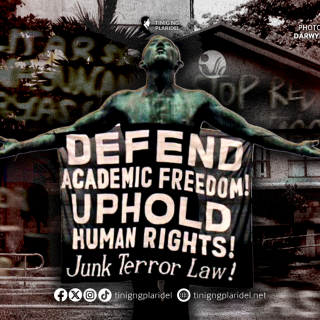
The NSC was referencing a resolution from the Anti-Terrorism Council, a product of the 2020 Anti-Terrorism Law. The Anti-Terrorism Law, long criticized for its vague definition of terrorism, laid the groundwork for this attack on the media and perhaps the more that would come.
With the rise of pro-administration vloggers attempting to replace and delegitimize the press, journalists are all the more challenged to hold power to account. The state’s ambivalence at a growing culture of impunity remains a growing concern for journalists covering stories for the next administration.
Audiences do not need an even wider information gap, which they have already contended with from previous efforts to malign — and shut down — other legitimate news organizations. The NTC fails to realize that the consequences of its actions will eventually fall on the Filipino people after all.
This decision also falls on the lawmakers who proposed and lobbied the anti-terrorism bill, the president who signed it into law, and the judges who upheld most of the law’s provisions. These state actors have largely ignored the public outcry surrounding the controversial law, which many fear would be weaponized to strike down dissent.
Tinig ng Plaridel (TNP) calls on the NTC and the NSC to reconsider their arbitrary inclusion of legitimate news organizations and civil society organizations in their list. We also call on media practitioners, press freedom advocates and our colleagues in the campus press to condemn this glaring violation of our constitutional right of press freedom.
TNP also reiterates its denouncement of the Anti-Terrorism Act for normalizing attacks on the press in this political climate. Our silence during these times will only make us complicit to injustice, which goes against our very mandate of truthful and critical reportage.
So long as the attacks on the press and progressive organizations continue, there can never be true democracy. An attack on press freedom is an attack on the Filipino people.